
Lockdown Learning for Schools in September

red and white signage
Photo by Anna Shvets on Pexels.com

When the lockdown came for us in teacher education here at UOB towers, it was like we had been building up to this, technologically, for some time. Little did we realise it, but the past two years that we had been piloting webinars, developing online teaching pedagogies and moving face to face delivery to online delivery were going to become very relevant. The reason we were developing this was quite simple: mentors having to drive a long distance to mentor development face to face sessions were delighted to sit and have a webinar from home instead with a cup of tea beside them and with no commuting. We had just started to experiment using the flexibilities offered by this technology with some of our trainees when the university shut its doors for COVID19 and our entire programme, overnight, moved online. The same content got taught at the time it was scheduled. Live and exceptionally well attended webinars replaced face to face sessions and it was as seamless as switch as you could imagine. From the trainees’ end, this was a bit of a shock (they relied on the physical library more than I thought), but to their credit they have been very resilient despite the challenges of losing physical interaction with their peers and tutors as well as a change in approach to teaching. No matter what we try to do as tutors, we cannot replicate the live synchronous and emotive experience of learning that happened in the physical classroom (I am from the reader response school of thought) and I think we all see the online version as an inferior substitute to the real thing. Though, to be fair to online live webinars, there are some sessions which have proved to better suited to webinars – ‘preparation for assignment’ type seminars where thinking time, intense question and answer sessions and the ability to record everything have proved to be a superior model.

We are fortunate in our School of Teacher Education to have well designed Virtual Learning Environment technology underpinning our delivery. Technology that was designed and used to deliver taught and assessed units within courses (as opposed to Zoom etc., being designed for business). The students, as I said, overnight, have remained enrolled in units, enrolled on courses and ‘attending’ designated sessions as timetabled. The staff are teaching as much as they ever were and apart from some tricky assessment modifications we’ve by and large ensured that the trainees have had a smooth transition in terms of academic input. This shows that we are benefiting from the level of technological infrastructure in homes, with trainees and with the university. Indeed, business and charities are in a similar position – the flexibility of technology has enabled us all to deploy social distancing as a strategy to push back against the R rate.

Thinking about schools now, it is clear that the way forward will be an adherence to the current rule no unnecessary close social interactions. If you can work from home or learn from home using the flexibility of technology you should and alternatively if you can run your business or attend somewhere with social distancing then you can do that. That’s the way the UK has chosen to keep R down (there are other models: Sweden, South Korea and so forth). Some people have to go to a workplace and more people will go back to a workplace as they open up with social distancing in place, but some people can continue to work from home. The same doesn’t quite apply to pupils in schools. Most pupils will have to go to school and be taught via traditional pedagogies by teachers in face to face sessions for some of the time if not all of the time. In the classrooms, social distancing  can and will have to be practiced (due to smaller numbers in school through rota systems). Some pupils will learn online effectively, because they have the environment and technology to do so. Some pupils who could stay at home will go to school because they don’t have the learning environment to learn from home. Those pupils who can learn from home will be taught by teachers using online pedagogies to supplement the face to face teaching. Teachers and schools from September will need to be able to teach face to face and to teach online. What teachers and schools are doing, on behalf of the government, is deploying the flexibility offered by technology to reduce social interactions. It could be that once the R rate comes down and test and trace becomes much better in terms of its success rate that the government will switch to an approach where social interaction is not so heavily repressed, but until we see the infection rate come down and the test and trace capacity increase we have to think about logistics based on current approaches.

My job as a course leader of teacher education is to ensure that the teachers coming in can teach online as well as face to face. We are already doing this for the outgoing cohort. They would normally have run a face to face ResearchEd style conference to finish the course. This year, they will run that conference as an online conference. Live webinars will replace the keynotes and the breakout presentations. They will put on an entire day of live webinar based learning for each other. We are already looking to enhance next year’s cohort’s knowledge of TEAMS and so forth as part of our planning.

When I look to the future (as someone who has written frequently about technology in education), I can see that blended learning is about to become a reality for everyone. You can have social distancing in schools because you must – for those who will attend school. You can have live teaching online because you must – for those who can study from home for some of the time. I know that live webinars are not as good as face to face sessions, but that’s not the important part right now. What’s important is to keep unnecessary social interactions to a minimum whilst maximising safeguarding and education.  There will be regional variations as well – schools and parents in an area seeing a rise in transmission could expect to be placed back on extensive lockdown. Teachers will be, for next year at least, waiting for the COVID19 phone call as opposed to the OFSTED call.
Rosenblatt’s Principles of Instruction

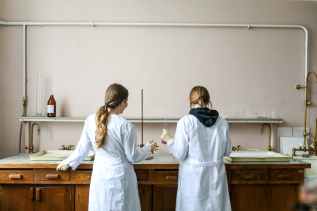
women in white laboratory gown standing
Photo by Polina Tankilevitch on Pexels.com

You might be familiar with Rosenshine’s Principles of Instruction, but are you are aware that the similarly named Rosenblatt also had principles of instruction some 60 years earlier? In the interest of revisiting educational history, Rosenblatt’s principles are as interesting to review as Rosenshine’s.

To start with, Louise Rosenblatt didn’t collect her own principles together. They were spread out amongst her seminal work on transactional theories of literature and Probst put them together. Indeed her most famous text from 1938, Literature as Exploration, is still in print . These principles emanate from the teaching of English (she is best known for the concept of ‘Reader Response’), but the principles can also be explored through the lens of other subjects by considering the notions of epistemic curiosity (Litman, 2008). The main principle to note here is that there is an element of the learning that cannot be placed in a knowledge organiser and cannot be directly instructed for. In English we refer to it as reader response. The idea that every person’s experience of the text is unique. The text sits alone until a reader comes along and consumes it. In doing so, they have an experience. That experience then makes up part of the meaning of the text. So, let’s look at the Rosenblatt’s principles of instruction as put together by Probst (1987).

Thus, you can see how it contributes to contemporary debates over knowledge, “knowledge…is not something to be found, not something the teacher can give to the student…”. Here, I don’t mean that one cannot organise and plan knowledge for lessons – planning and organising knowledge ahead of a lesson is a very good approach to teaching. I am saying that not all knowledge can be organised and planned for in lessons. For English, this is fairly well enshrined in our subject. Each student, when writing about literature, will offer a personal response over and above those efferent aspects of the text that the teacher can plan and teach to the student. It’s not enough, in English, for the student to learn about characters, plots, contexts and themes in literature: they must also personally respond to it. Take the recent real life story about Lord of the Flies – it makes people question their response to the original text. Do humans forever have a touch of the animal within them? Or is it not so inevitable? Our personal response when we read the text forms part of the meaning of the text. And further, that meaning changes as we change and the world changes.

The next step I want to take this to is as a lens through which to look at other subjects. Litman writes extensively about epistemic curiosity. Both the desire to learn more about something one is passionate about and also the desire to fill a perceived gap in knowledge. When learning within a subject, experiences happen. These experiences also feed into epistemic curiosity. The reader response can therefore be applied to other aspects of the curriculum. When learning about the horrors of slavery or the civil rights era, many of us felt compelled to know more. Sometimes, as Litman points out, that compelling need is because we feel a deficit of knowledge. We feel it is important to know more about this topic. It drives our own self-regulated learning with the metacognitive engine running at full speed. On other occasions, a teacher might expose you to a topic and you find it compelling. I still recall the experience of being taught the Norfolk crop rotation method from medieval history in year 9 and deciding I wanted to find out more – independently.

The concepts behind Rosenblatt’s principles of instruction therefore play an important part in a teacher’s planning. When is this going to happen in the lesson? How can we use discussion to facilitate this ‘experience’ and response. It’s not enough to learn that knowledge which we have planned for them to learn. There is more – the experience of learning that knowledge and then further: what is that experience like? By this, I don’t mean gimmicky things which makes a lesson ‘interesting’ – I’m on record as saying our subjects are interesting in their own rights. But that ‘interesting’ actually means it feeds into curiosity. What we want to achieve in our lessons is an experience where the students themselves find our subject interesting and that bits of our subject knowledge are attached to these experiences of curiosity.

I’m interested to know how other subjects approach this unique idea of the triangulation between the student, the knowledge and the experience. I have written before that knowledge alone is insufficient (see our article on Disposable Knowledge). When learning knowledge, students will have an experience of learning that knowledge and that experience becomes part of the knowledge. We can’t say in advance what that experience will be, but it is something we can plan for and even look to enhance.


Learning, Memory and the “Ruck Schema Problem”

photo-1529663297269-6d349ec39b57

One of the many marvellous things about the recent rugby world cup in Japan was the re-emergence of the open side flanker. For those of you not versed in the dark arts of rugby union, the open side flanker usually wears the number 7 shirt, and one of his or her main jobs is to attack and defend rucks – the situation that occurs when a player is tackled and the ball goes to ground. In defence, they often try to pinch , or “jackal” the ball from the tackled player so that possession is turned over. In attack, they are often responsible for the clear out; the forcible removal of a defensive player from over the ball. In Japan, England often played with two open side flankers in the form of Sam Underhill and Tom Curry, both experts in the number 7 role.

The open side flanker is an example that we sometimes use here on our course to illustrate the problems of seeing learning as being purely about memory. In the materials which surround their new inspection frameworks,  OFSTED  define learning as being about “ effecting a change in long-term memory”. This is fine up to a point;very few people could credibly argue that memory had little part to play in learning and it is clear that many things that we need to learn in school rely upon us transferring things from our working (or short-term) memory to our long-term memory.  However, as it is our role to get trainee teachers to think about learning in as many ways as possible,  we like to problematise that definition and get them to think beyond it.

So, back to our open side flanker. One of the roles of this sort of player is to learn to recognise the types of situations that occur at rucks and to make decisions about how they could respond to them. I, as the player’s coach could teach them as many of the possible situations  that occur and get them to remember both the situation and the potential responses to  them there are.  We might see this as the player developing their own “Ruck Schema “ – a cognitive structure in my brain which holds all the information I need to respond to a particular situation. The schema is a well-established and explored idea in cognitive science, and indeed a good deal of cognitive science in education sees teaching and learning as a matter of schema development (Sharon Derry’s paper on Schema theory provides an introduction that we have found useful on our course) .  So as the player’s coach, it is in my interest to develop the players’ ruck schema by getting them to remember as many responses as I can teach them. However, he or she will need an opportunity to practice his or her skills in order to strengthen those memory structures. This could be in training or in games.

So far, so good. Memory is key to my development of the next Sam Underhill. But why is it the case that very few of the young players that I coach are likely to reach that high level? Well, the answer is probably that my teaching needs to cover a bit more than just what the player needs to memorise in order to respond to the game situation. Some of what I need to teach the player is reliant upon other things; motivation, for example. I need to motivate them to do other things which are not solely reliant upon memory. Diet, conditioning, mental strength. These are all things that are largely not about my ability to get the player to “remember stuff”. They probably rely more upon my relationship with the player, my ability to tap into his or her hopes and fears and how I prepare them to deal with the unpredictability of the game situation. We should say here that all these things are, for us at UOB, really significant jobs that the teacher has to do with their students, and that these are largely not about altering long term memory. They speak to other, deeper-seated elements of our psyche.

There’s a parallel here for learning in other areas of the curriculum as well. We would argue that there are some fairly significant elements of teaching in the Arts which aren’t  just about memory. Interestingly, this isn’t a version of the well-trodden “knowledge vs skills” argument. It’s more about the fact that there are some aspects of the Arts that don’t rely on memory (or at least not in the sense of the working/long-term memory binary set up by OFSTED), but still need to be taught by teachers. A good example of this is improvisation – the practice that music and drama students need to engage in when they make an immediate, unprepared response to a text or stimulus. Now, before we go any further, Drama students will want to remind us that Konstantin Stanislavski thought that memory was essential to improvisation – and they would be right to do so. However, some psychologists, and indeed, Stanislavski himself , would suggest  that it relies on “affective” or “episodic”  memory . This is an important distinction to make as it means that the teacher has to do something very different, in pedagogical terms, to the kind of thing that is proposed by the instructional science of someone like John Sweller (which is where OFSTED’s definition of learning originates from). It is a distinction that points to the fact that learning is a little more complex than simply effecting a change in long-term memory.

An excellent recent instance of what we mean here is provided by Alan Yentob’s documentary “East Side Story”, which recounts the story of a group of young people with little or no experience of drama coming together to write and produce a play about knife crime. In the documentary, we see the students being encouraged to improvise action and dialogue by their teachers in order to develop a script. While the improvisations have some basis in the young people’s lives – and thus are building upon their episodic memories – the teacher is coaching them through the process, rather than instructing them to remember how to do it. They are getting the students to use their pre-existing memories, rather than building their long term ones, and indeed, the student’s success as an improviser is not completely dependent upon these memories, but rather upon their confidence in relating them and their willingness to engage in the improvisational process. This is completely different, pedagogically, from the process of getting students to commit a mathematical or scientific formula or process to their long-term memory. A similar thing occurs in Jimmy McGovern’s documentary “Writing the Wrongs”, in which  McGovern works with a group of sacked dock workers to write the script of his 1999 drama “Dockers”. McGovern and the novelist Irvine Welsh, act as teachers but the processes they are teaching have little to do with some of the more mechanistic approaches to writing that have garnered popularity in certain parts of the world, which encourage students to commit a procedure for writing to memory.

Performance, or perhaps more accurately, learning to perform, might be something else that relies less upon memory and more upon the teacher’s ability to unlock certain other parts of the student’s mind. Music teachers will be very familiar with the student who is technically very good, practices regularly, has a good understanding of the relationship between what they are doing and music theory , but cannot, for whatever reason, reproduce the quality of what they do in public performance. Again, the teacher here, like the rugby coach, needs to use other skills and other kinds of knowledge in order to help the student overcome these difficulties. As a PGCE course we are very interested in what these kinds of knowledge are; motivation, attention, perception, creativity, confidence and the awkward nature of the human condition all might be things that our trainees need to consider. Memory is an important part of learning, for sure, but it’s probably not the only part.

The late Jerry Fodor, perhaps the 20th century’s pre-eminent philosopher of mind, thought that cognitive processes, such as memory, made bad candidates for empirical research. In effect, we could know a great deal about cognitive inputs and outputs, but not very much about what was happening inside the brain. Even those people, like Gregory Murphy, who suggest that developments in modern cognitive science mean that Fodor’s ideas have less pull than they used to, accept that he had a point. Cognition, and indeed, memory as a constituent part of cognition, are things that we still only understand a limited amount about, and as such, it is problematic to commit ourselves to narrow definitions of something like learning, when the things that influence that process are more complex than they appear to be.