Revolutionise Learning with National Education Service AI Technologies

Imagine glancing into the near future of education. In Sweden, Lexplore uses AI-powered eye-tracking not just to assess reading, but to actively screen children for potential difficulties like dyslexia, identifying needs often before they become entrenched problems. What’s striking isn’t just the technology; it’s the philosophy. This feels less like conventional testing or inspection, and more akin to a proactive health service identifying risks and enabling early support. Could this preventative, diagnostic approach be a model for England’s Department for Education?

The UK’s National Health Service operates on a foundational principle: catch health issues early through reliable and inexpensive screening. Interventions triggered by timely screening are invariably more personalised, cheaper, more successful, and less intrusive. Think about developmental checks for babies or targeted screening programmes for adults based on age and risk factors – it’s not a one-size-fits-all annual exam for everyone simultaneously. What if we applied this proven, preventative philosophy to education, but converged with the power of AI?

We stand at the cusp of an explosion in convergence between artificial intelligence and educational technology. AI is rapidly moving beyond simple automation; it can increasingly ‘observe’ and analyse the process of learning. Imagine systems that don’t just mark a final answer, but watch how a pupil reads – tracking eye movements for fluency and comprehension indicators. Picture AI analysing handwriting formation for potential motor control issues or even just letter formation; identifying patterns in mathematical problem-solving that might suggest dyscalculia or misconceptions; observing collaborative interactions in virtual environments; or even assessing biomechanical efficiency in PE. While acknowledging the critical ethical considerations around data privacy and algorithmic bias that must be addressed, the potential for deep, nuanced understanding of individual learning is immense. And it will arrive. Don’t think the tidal wave of AI is going to miss education. It’s going to cover every single bit of it.

This capability of AI allows us to envision a shift away from assessing children primarily to measure school performance, towards screening individuals to understand their specific needs. Contrast this with our current reliance on blunt, mass-approach strategies. Pupil Premium funding, while well-intentioned, often lacks the granular data to target underlying needs effectively. Large-scale EEF randomised controlled trials dictate averaged-out ‘best practices’ that may not suit every child or context. Rigid, centrally mandated phonics schemes meet pupils at varying developmental stages.

Consider the annual phonics screening check – the infamous graph plotting average scores by birth month, a near-perfect downward slope from September to August-born children, is a stark illustration. It highlights the absurdity of assessing every child at the same chronological point, ignoring months of developmental difference. The check itself may have value, but the one-size-fits-all process is flawed. It’s a system designed for cohort-level data collection, not individual diagnosis. Similarly, high-stakes standardised tests often narrow the curriculum, induce stress, and provide only a snapshot in time, failing to capture progress, promote creativity, or cultivate critical thinking.

Imagine, instead, dynamic, AI-powered screening. Phonics checks could be triggered by birth month, not school year cohort. Algorithms could identify children needing earlier or more frequent screening based on a growing profile of risk factors – perhaps language delay, family history, or early indicators from those AI observations of reading or writing. A five-year-old wearing an eye patch for 18 months wouldn’t just potentially ‘fail’ a single test; their progress could be sensitively tracked via regular screening against national benchmarks for learners with similar challenges.

The data generated wouldn’t primarily serve to rank schools, a practice often misleading given the vast differences in intake, funding, and context. Instead, it would empower precise, personalised interventions. AI analysis identifying specific phoneme difficulties could trigger targeted support from a school’s in-house reading specialist. Real-time assessment of maths understanding could dynamically adjust adaptive learning software. Observed motor control difficulties could lead to specific occupational therapy recommendations. This approach allows resources – human expertise, tailored software, specific aids – to be channelled effectively, supporting a child directly.

Scaling this vision creates a powerful national dataset focused on children’s learning needs and progression trajectories, not crude school comparisons. This brings us back to the idea of a “National Education Service.” While the term was politically championed by Labour in recent years with a focus on universal access and lifelong learning, this technologically-enabled vision offers a different emphasis: a service philosophy built on proactive, individualised screening and support. It uses AI not for judgment, but for deep understanding, enabling interventions that are early, cost-effective, successful, and minimally intrusive where possible.

Isn’t it time the DfE seriously considered shifting its focus from ranking schools through mass assessment to truly nurturing every child’s potential through intelligent, personalised screening? Perhaps a reimagined NES, powered by ethical AI, is the future. It’s already happening at an elite sport level, so why not be bold and have a plan to use it for every child in the country.

Dr James Shea @englishspecial

Image of elite sport using AI to ‘watch’ a player’s perfomance

What Cognitive Load Theory needs to consider: not all effort is the same

The application of Cognitive Load Theory (CLT) to teaching and learning premises on quite a straightforward idea: there’s an intrinsic difficulty to learning tasks, often made harder by extraneous load, whether that’s a cluttered slide deck with no dual coding or insufficient worked examples. Clean up the learning event and you can enable all pupils to access the intrinsic learning more efficiently. As the heading of standard 2 says in the Core Content Framework (CCF) for all new teachers, “How [all] Pupils Learn”. Only, it seems, that’s not how all pupils learn. Because learning something new actually takes effort to pay attention. And effort, it seems, is not the singular thing that many seem to think it is.

A new (2024) paper out has targeted this limited understanding of ‘effort’. It is open access and you can read it for yourself here. But it has implications for teachers and how we think about learning so it is important for us to look at their key findings.

The authors divide effort into three key areas.

Effort required by the complexity of the task.

The harder it is, the more effort. We know a lot about this. Not enough difficulty and we become apathetic and demotivated. Too much difficulty and we get disillusioned. This is the area CLT is focused on. Let’s enable pupils to tackle more difficult tasks by reducing the extraneous load and improving their ability to tackle things through worked examples and well designed dual coding.

Effort required to focus (including how much you are averse to focusing on it!)

The continuous focus a task demands is not related to its difficulty. You could be having to complete a large spreadsheet using very similar tasks over and over. Copy and pasting and calculating. It requires focus, but it’s not hard. In fact it’s quite boring. Boring, it seems, requires more effort. It’s painful to have to focus when something is boring. I think we can all think of examples of this one!

Motivational effort

Generally, students are ready to allocate effort if they are motivated. These can be extrinsically motivated via deferred gratification (e.g. qualifications and monetary rewards) and intrinsically motivated such as through epistemic curiosity or prior positive experiences. However, students can also not be motivated by deferred gratification. ImPact’s latest report on pupil absence suggests persistently absent pupils are less motivated by deferred gratification and that a sense of belonging could be more powerful in providing motivation.

To put this into teacher terms and get an understanding of how all 3 types affect a single task with a consistent intrinsic load, let us think about the act of marking and assessment.

To assess a work against criteria, you have to conceptually hold the entire work in your head. This can be quite difficult for longer extended writing pieces with large amounts of information. You also have to have the subject knowledge to assess it whether for subject content or for spelling and grammar. There is an innate and intrinsic difficulty to assessment (sometimes made unnecessarily harder by illegible handwriting and no quiet working space to concentrate on the marking!)

To mark work, you have to focus. That’s actually quite hard for many who have to assess. To mark for one hour takes focus and concentration. It’s tiring and sometimes you are too tired to mark. Sometimes you have to mark huge amounts like during mock examinations or when you are working as an examiner and you are grinding through endless similar answers over and over.

And that leads us to motivation. Remember the days of triple marking and multiple colour pens? Of ‘Verbal Feedback Given’ stamps? Or even today’s double and triple mock examinations where schools are trying to wring extra points out of pupils via exam practice. You might not always be that motivated to mark these. You might feel this should be outsourced (as some schools do) and that a third set of mocks is not spending your time well. You may well really dislike marking, which may be viewed as a tax on your ‘free’ time. Many polls of teachers find this one of the least liked areas of teaching. It’s no secret exam boards struggle to recruit examiners.

And so it’s not enough just to think about the difficulty of marking. You have to think about the need to focus during the act of marking and the motivation needed to do your marking. It’s why we do things like whole class feedback instead of marking whole sets of books. Marking whole sets of books with detailed annotation can require lots of effort even though it is not actually hard to do.

Now reflect on effort in your lessons – the same principles around effort applies to students. We need to think not just about the first area of effort which CLT attempts to optimise, but also the other two areas of focus and motivation. A group of trust leaders told Jon Severs of the TES that a more diverse curriculum with less content to cover (to summarise his meeting with them) might mean students can focus on English and maths more effectively because they have other subjects which they really, and I mean really, enjoy, but more importantly also make them feel part of the school and motivated to enjoy school. We have to see school not just made up of tiny episodes of teaching and learning which all pupils experience in the same way, but as a ‘whole’ school experience for a diverse range of learners who need to be able to generate the three types of effort needed to enjoy and succeed during their time in school.

Working memory: could it be that it’s just poor resolution rather than 4-7 items?

We’ve all had the lecture. You can only hold so many items in your working memory because there are only so many slots. It’s in the Core Content Framework (CCF) for trainee teachers. It’s in the Early Careers Framework for recently qualified teachers. And it’s in all the NPQs. If I undertake sequence of colour, number, or items of information tests on you then, after between four and seven items, depending on context, you cannot remember the sequence accurately. Here is what it says in the CCF:

And so we break down instructions into small ‘chunks’. We think about capacity all the time and use it for instructional coaching. Granularity is key. But that idea of working memory having a limit, having only so many slots, is not the only idea in psychology. There is another theory which has just as much validity as the fixed idea. An idea that suggested we could be using many more items than 4-7 in teaching and it would still work. Welcome to the world of low resolution memories…

One competing idea is that the limit on capacity is based on resource rather than a fixed number of slots. It’s nothing new – it’s been around as long as the ‘slots’ idea and instead of slots, it says that working memory is a fluid pool of resources. In other words, you can remember a few things with precision, but that when you overload working memory the result isn’t a total failure to remember additional items, but a degradation in the quality of the memory of all eight items. It’s like pouring your working memory into 8 jars instead of 7. It’s spread around more thinly. The more items, the more pixelated (to use a modern term) the memory. If you want sharp resolution, then keep the number lower, if the outline is important and you’ll be adding resolution over time then the detail isn’t so important at the start. For example, an important part of kinesiology is knowing all 206 bones in the human body. But you still start with the skeleton of all 206. You will probably then divide the skeleton up into groups of more than 4-7 bones. You add detail as you go down so that magnitudinally, the memory can zoom out and in as it is needed. In many ways, it makes good sense to start with a very poor pixelated skeleton memory and then build detail up, rather than start with small detail of 4-7 items. Having the ‘whole’ in your memory, no matter how grainy, can work well when adding detail later on and being able to construct the fine detail into the whole picture.

Where else might this begin to make sense in teaching? Well, certainly in English. One of the first things you do before teaching an extended text is to teach students the plot. If you are teaching pupils The Merchant of Venice then you teach students about the pairs of characters, the love interests, the racism, the basic plot around the borrowing of 300 ducats by Bassanio, through his friend Antonio, to pretend to be rich in order to woo Portia (Bassanio really doesn’t come out well in this play), the cross dressing and even the idea that Portia is played by a man who cross dresses back into a man to play the young lawyer. It’s a fiendish plot and one of Shakespeare’s more simple plays! But we absolutely teach the plot first using name tags, bags of gold and solid drama pedagogy. And all those items are not only more than four to seven items but the pupils won’t remember much of it…in great detail. However, as we go through the play and its key scenes, so we will add detail and so that grand plot will come together just like the skeleton with the 206 bones. Once that has happened, then our pupil can zoom in and out of the play examining themes, character evolution and key quotations at ease as they consider the play through the lens of a question. They can recall the large plot of more than 4-7 items and also add detail to each subsection of the plot. This idea is reinforced by one the earlier ideas about resolution rather than slots from this paper by Frick (1988) which found the parsing of knowledge (separating knowledge into items) did not happen as the knowledge entered working memory, but at the point of recall, something he calls the ‘process of recovery’.

Working memory is a finite resource. But rather than see it as restricted to 4-7 parsed slots, begin to see that depending on context and the pupil’s individual strength of working memory, resolution is that which is affected rather than number of items. And then, even further, start to think about delivering something that won’t be recalled immediately in fine detail. Deliver a whole worked example in its entirety first and then go through each section of the worked example in detail.

One issue for us all is why the CCF eschews this contrasting idea of resolution from its literature review. You can still overload working memory, but you are only overloading its ability to create memories with fine resolution. And then Frick would say the parsing happens on the recall, not on the initial learning so there’s further debate there.

There is clearly a place for lower resolution memories in teaching in terms of bigger and more complex sets of data. By adopting the idea of resolution you begin to work with magnitudinal ideas. You can move along the magnitudinal spectrum and allow pupils to zoom in and out of schemata seeing both overarching and complex pictures whilst they are also able to focus and recall fine parsed detail. It’s an important refinement to the idea of working memory and cognitive load and we have to, as teachers, consider how that affects the way we approach our teaching.

Copyright © Dr James Shea and Dr Gareth Bates 2023

Twitter:

Dr James Shea https://twitter.com/englishspecial

Dr Gareth Bates https://twitter.com/smashEDITT

Internal School Avoidance- how pupils avoid paying attention

Photo by SHVETS production on Pexels.com

In the classroom, a pupil uses attentional control to learn. They suppress their other thoughts and instead focus wholly on the thing being taught. Well, that’s the idea. Unless they don’t. And we’ve all been there. Sitting up, listening, tracking the speaker, nodding and wholly zoned out. We are as guilty as any other when it comes to not offering attentional control from time to time.

There are a variety of reasons pupils do this. Sometimes they are quite open about why they are doing it. ‘I’m tired.’, ‘It’s boring’, ‘I already know this’, ‘It’s too hard’ and ‘It’s too hot’ are all things pupils say to us. Sometimes they are discreet about it. They are are slow to get ready, slow to write, only answer questions in simple terms, make little effort in their spoken or written work. They are not paying attentional control. They can do it habitually in every lesson, or only in some lessons and indeed sometimes only for one teacher. There is a ceiling to how much behaviourist approaches to learning can improve this situation. But an issue it is. Because every educator you know will say they see this lack of attentional control on a regular basis from pre-school to post grad. And I want to personally honest here. I’ve been in meetings and talks where I am sitting up, listening, tracking the speaker, nodding and I’m actually away with the fairies. Sometimes my thoughts just go off on tangents. Sometimes I have other things on my mind. I’ve written before about anxiety and the way this affects our working memory and capacity to provide attentional control. If it affects us as adults it most certainly affects children. I have to be clear. I’m not focused on children who are trying hard to provide attentional control despite challenges. Those who have anxiety or other needs which are impairing their attentional control are not the subject of this blog. It is the many who could, but don’t. They waste time, they work slowly, they participate less than they could and they don’t focus their executive function on the learning happening.

A child not paying attention, avoids offering the attentional control required to make learning happen effectively. That avoidance can be space physical (a pre-school child might not want to move from one zone to the carpet zone), it can be subtle physical avoidance (a child might make getting ready to work take so long that the “Do Now” activity time has finished before they started) or it can be mental avoidance (they sit quietly, look at the teacher, track, nod, but make no effort to focus on the actual learning). One of these three things happen in pretty much every lesson I’ve ever observed. It’s incredibly common. However, I want to focus on attentional control avoidance because this countermands everything we are doing as teachers.

Using Baddeley’s model of working memory, the central executive brings together the visuospatial sketchpad and the phonological loop to form memories. However, this happens at a variety of levels. Imagine I am walking down the street thinking to myself. I don’t pay that much attention to the environment around me or the familiar route I am taking. However, I then get to a point where the road is closed blocking my normal route. I then need to find an alternative route in order to continue, it is the central executive that enables me to do this as it ‘switches’ attentional control. Pupils are doing similar things in lessons. They can glide through activities and teacher talk on autopilot – seemingly there, but not paying the level of attention required for strong learning.

We’ve all heard about the new focus on internal truancy. First there was external truancy where pupils skipped schools in unauthorised absences. Then we noticed they were dawdling between lessons, going to the toilets a lot – internal truancy, so we’ve cracked down on that and had numerous debates about locking toilets. But there is a swathe of pupils habitually and frequently not paying attention that are flying under the radar. They use classic avoidance strategies to appear compliant whilst keeping their learning minimised through not paying attention. It is a form of truancy that is so subtle, but it has a similar impact on lost learning. Why are we not cracking down on this as much as external or internal truancy? Because it’s really hard to force someone to pay attention if they don’t want to. It’s why a good teaching assistant is so helpful in a classroom. They can get through to the passive child and help them start to pay attention again. If they pay attention for the child that is not so good as a teaching assistant should not be doing the teaching. But they can intervene to help the child pay attention again.

Photo by World Sikh Organization of Canada on Pexels.com

And are there answers? Well, yes.

I’ve written before about episodic curiosity. When a pupil wants to learn in your subject they apply maximum attentional control to every aspect of learning in your lesson. It absolutely supercharges their progress. You could take the same child and move them to a different teacher or school and they would still be making awesome progress due to that level of attentional control. I recall a pupil bumping along at sub 4 for all of Year 10 and at the end of the academic year they told me they wanted to be a solicitor and asked what English grade they’d need to make this dream happen (needless to say, my answer was a shock to them). What happened next astonished me. They started paying attentional control to every aspect of every English lesson. They asked for and completed extra work. In the exam they scored an 8. I can’t take credit for that learning. But it taught me about the power of having a pupil motivated to learn in my subject. It taught me about epistemic curiosity and how important that is. When I really want to learn something, I really pay attention and the same is true for pupils!

We seem to be focused on cleaning up the cognitive landscape to remove extraneous load. We are using knowledge of studies from psychology to make remembering easier. We are very focused, rightly so, on behaviour. And then we watch child after child, in lesson after lesson, not pay attentional control. And we, as teachers, see it very often. There is a ceiling to CLT in lessons and a ceiling to behaviourist approaches. Those ceilings are that a child can simply withdraw or mute their attentional control. They might as well have 60 days a year off school instead, because that is the impact on the learning of some of those with the most reduced attentional control. There are lots of answers already out there and each pupil is unique and their personal solution might be complex. But until we start focusing on this area, then we are consigning a huge amount of learning hours to the dustbin of internal school avoidance.

Teacher well-being: it’s not about the doughnuts!

Photo by Lisa Fotios on Pexels.com

Back in 2008, Gwyneth Paltrow started sending out a newsletter for her Gloop empire. It was founded on a simple premise: ‘being well’ was no longer defined by ‘not being unwell’. Being well means actively preventing harmful things from entering your body or mind as well as actively undertaking behaviour which leads to a healthier body and mind.

Dial back to the message being sent out to teachers in that 2000s era and it’s about ‘resilience’ and preventing snowflake teachers from wimping out of the hard yards of being a teacher. It was only when they noticed huge numbers of teachers leaving the profession that they started to really take these things seriously and we started to see initiatives about well-being and workload being brought in. And some of these initiatives have had an impact. Certainly the ‘deep marking’ years of triple coloured pens seem to be finally behind us. The ‘verbal feedback stamp’ has been ground down to a pernicious stubborn nub. But all of these things are not really getting to grips with just what we need to do with our profession.

If wellbeing is no longer ‘not being unwell’, what alternative definitions are there? Cambridge University’s Wellbeing Strategy and Policy offers “Creating an environment to promote a state of contentment which allows an employee to flourish and achieve their full potential for the benefit of themselves and their organisation”. The DfE offer an Education Staff Wellbeing Charter which says wellbeing is “A state of complete physical and mental health that is characterised by high quality social relationships” saying soberly and perhaps presciently “it is critical in recruiting and retaining high quality education staff now and in the future”.

When a teacher has to work extraordinarily long days and weekends, sacrificing time that could be spent with their family or on their health – the effect is not just tired teachers. It’s teachers without well-being. Teachers unable to achieve well-being directly because of their profession. It’s effectively like being unwell. These teachers know that their job is harming their personal physical health and they know it is harming their relationships with people important to them. In teaching, there’s little flexibility alas. You either work long hard hours or you move schools to a school that doesn’t make you work long hard hours, or you change profession. But don’t people in non-teaching jobs work long hard hours? Sure, but not every week, every weekend and week in and week out. And if they do, they’ve got a similar problem with well-being or it’s likely their employer are offering something else which people accept to offset the harm – such as a high salary.

When you see a school offering doughnuts, or well-being days – it is easy to think these are good things. However, it’s not really targeting well-being. A reduction in workload initiative which hands back time to a teacher to spend with their family is much more powerful as a well-being initiative. When teachers are stressed from work intensity, behaviour management issues or even toxic colleagues and managers then this causes cortisol levels to rise. Today, instead of having resilience to high cortisol levels, teachers are increasingly leaving the source of this stress and finding alternative places of employment. It’s why leadership and retention of staff is seen as so important. Whilst praise and appreciation of the hard work and sufferance undertaken by a teacher is sometimes well received, it does not remove the source of the workload or the stress. Teachers all pull hard on singular occasions – a school play or a parents’ evening. But when it happens every week the praise starts to wear thin.

In some trusts, the job descriptions and role outlines are clear – you are expected to have a worklife balance whether you are M1 or UPS. In some trusts, the job descriptions are the opposite. We all remember ”that” advert: “High energy and sacrifice are required to excel in this position. We cannot carry anyone. We need a commitment from our assistant headteacher to stay until the job is done.” The suggested hours of 7am to 6pm are beyond those with young children or upper pastoral care responsibilities. Should some roles really be exclusively for those without children or responsibilities?

That is not to say teachers cannot work hard without harming themselves. Going to see plays, visiting a museum, listening to a show on Radio 4, getting up early on a Saturday to travel to a ResearchEd event are all extra hours related to work, but they are not toxic hours. There is a balance to be had.

When I look at parts of the profession, I see harm to well-being and unwell teachers. We know that toxic people lurk in our profession. We know that no matter what Ofsted does to its inspection framework, its inspection process causes perpetual harm and a constant state of unwellness to those in our profession. It needs to rethink just how the process does this. Is it possible to protect children through safe-guarding and ensure high standards of teaching with less harm? The constant threat of inspection reduces well-being across the profession and some of Ofsted’s work clearly pushes teachers out of schools and out of teaching. It’s not about developing resilience and toughening up snowflakes any more. It is about cultivating healthy well-being and that means our profession is driving teachers away from teaching because these teachers want to be actively healthy and if they cannot achieve it in teaching they will leave and find a place where they can.

Fidelity – why too much of it might be driving teachers out of the profession

Photo by cottonbro studio on Pexels.com

The term fidelity has very much become a contemporary educational buzz word. It can be found in documents from the DfE’s ITT Market Review of Teacher Education to MAT central policies. It’s expected in the delivery of training for the Early Career Framework (ECF) and it is central to many NPQ leadership qualifications. It stems from a central tenet – that the implementation of policy, materials and processes needs to happen as it was intended. I will be clear here that this blog pertains to teaching and learning issues, not issues regarding safeguarding. Safeguarding is an important area and it is intrinsic to good safeguarding that we all follow processes correctly and reliably. This blog refers to communities of practice and how teaching and learning takes place.

We have already seen early rumblings of discontent around fidelity. ECF tutors delivering materials to Early Career Teachers (ECTs) going off-script was very much banned. ECTs should be taught the slides as they were written by the in-house slide authors goes the decree. However, Teacher Tapp’s report into the ECF makes for uncomfortable reading with 65% of primary and 49% of secondary ECTs saying the training doesn’t meet individual teachers’ needs. A clue to the solution for all this is in a little reported statistic that only 6% of ECTs felt that their conversations and interactions with mentors needed to change. Conversations and interactions good – rigidity of scripts and materials not so good.

Lave and Wenger (1991) are well known for their ideas about communities of practice (CoP). It’s quite a straightforward premise – schools, MATs, universities and so forth are communities of practice. The identity of the organisation is made up of interactions between members – called ‘legitimate peripheral participation’. During each participation, each member learns from the other and they also reaffirm their sense of identity within the organisation. Every time a teacher talks to another teacher in the CoP this happens. And your level of mastery within the organisation also counts. Those who have been in the organisation for a long time not only are masters, but are responsible for actions which are more central to the functioning of the community. Further, those who are masters broker the principles and ideas of the community to newcomers and thus ensure the community’s identity is reproduced within the interactions of the newcomers There’s an exchange followed by a reaffirmation (or rejection) of the identity that those in the community hold. It goes further, every time you adapt a resource or produce a resource for the community you undertake a form of reification for the CoP. Imagine, the school is embracing a knowledge rich approach and you produce a booklet which reflects this value within its design. What if the school then buys in another curriculum that replaces your booklet? What if the values that you embedded into your booklet are now not present and yet you are asked to show fidelity to this new ‘master’ author who you have never met and whose work you feel is inferior to your own in delivering good quality teaching to your pupils? You can quickly see how such situations can become quite toxic for those who are used to having interactions within a community. Should you have too many toxic interactions or no interactions at all then you begin to feel disaffected and wish to leave the community.

There are times when new entrants to the community bring new ideas. They may be a senior leader or a regular teacher, but bring challenge to the established ideas of the CoP. Occasional challenge to the CoP’s way of doing things from those within the CoP, whether teacher or senior leader, can be sometimes helpful and is seen, in sociological terms, as an important part of the process of keeping an CoP up to date. Allowing some autonomy and debate is a healthy part of a functioning CoP.

Yet, fidelity is useful. Reification of the principles of an organisation through actions and artefacts is part of the identity of a CoP and the collective vision of a school and its leadership. However, as Wenger warns – too much reification is not so helpful. Too much fidelity can achieve the opposite effect.

Achieving a balance of levels in participation and reification of the CoP is what leaders need to set out to achieve. Excess reification can be an issue. An example would be non-negotiables. ‘All lessons must start with five questions retrieving information from a lesson a year ago, 6 months ago, one month ago and last lesson regardless of the lesson’ (my italics) would be a good example of where adaptation has been removed. Even more, the retrieval might be handed to teachers in workbooks or pre-written slides with an instruction not to adapt. There are a number of issues with that non-negotiable not least from schema theory as well as whether the retrieval of that knowledge (for study purposes) is best placed during valuable teacher time at the start of a lesson on another area of schema. An experienced and knowledgeable teacher should be trusted with the freedom to adapt and, further, also to broker that adaptation to other members of the community.

The downside of removing teacher control is highlighted in a brand new study by Collie and Carol (2023). As teacher control is reduced, teacher workload begins to have a pernicious effect on teachers’ desire to stay in the profession. Their study of 400 teachers demonstrated that there are three profiles: teachers with job control, teachers with some job control and some with vastly reduced job control. They found, “Teachers in the maladaptive and midway profiles also reported greater emotional exhaustion and intentions to quit. The reverse was true for teachers in adaptive profiles – they reported the lowest levels of emotional exhaustion and were least likely to want to quit their job” (Collie and Carol writing in Teacher Magazine).

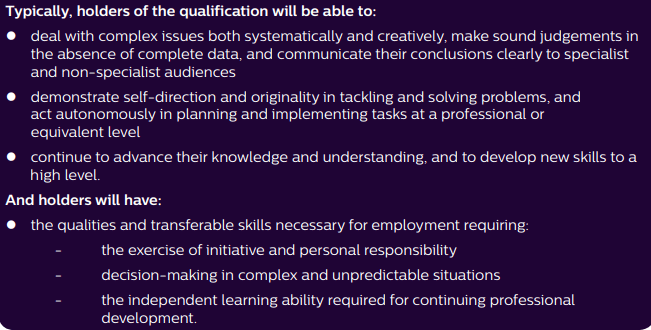
We should also consider that the majority of teachers will hold a L7 qualification in teacher education in the form of a PGCE or PGDE and some will have taken that further and completed an MA. The QAA L7 descriptors set out carefully what such qualified people are able to do: “demonstrate self-direction and originality…act autonomously in planning and implementing tasks…initiative…decision-making in complex and unpredictable situations…” (QAA, 2014).

The problem comes when you prevent such a deeply qualified person from undertaking any of those things in the name of fidelity. Such qualities are valued across the country in sectors other than teaching and so if we don’t take advantage of those qualities, if we don’t enable teachers to participate in their institution and become part of the institution and help broker newcomers to the institution, then they are more likely to leave that school, that MAT and perhaps our profession. The world of work outside of teaching will happily consume potential employees with that level of qualifications, knowledge and skill set in today’s competitive market.

I am fortunate that I work with a wide range of schools and trusts who really value their staff and involve them in the fabric of the school and MAT community. These trusts and their schools are excellent placements for trainees teachers and I am proud to work with them. But they have got the balance of fidelity right – they work hard as a community to decide what they want fidelity to and they allow staff to adapt learning and teaching using their expert knowledge evidenced by their time earned qualifications (which are a proxy for the above characteristics). It’s important we celebrate those trusts and schools as well as point out the weaknesses in insisting on too much fidelity. The cost is considerable if we consider the loss of those excellent and well qualified teachers who end up leaving our MATs and schools; our university teacher education departments and SCITTs; and without whom the teaching profession would be very much worse off.

You can follow Dr James Shea on twitter at @englishspecial

The big idea that’s affected how nearly all schools in England are led and run

In 1996, Roger Shouse sat down to pen an article for the journal, The Social Psychology of Education. He wanted to examine tensions between two visions of schooling. One stresses social cohesion (i.e., common beliefs, shared activities, and caring relations between members). The other emphasised strong academic mission (i.e., values and practices that reinforce high standards for student performance). His findings set alight a touch paper that has burned so brightly, they have become seared into American educational literature. They have also influenced a generation of school leaders, authors and teachers. When the Gibb and Gove revolution came along post-2010, they and those they followed, looked to America and its Charter Schools, looked to Deans for Impact, Doug Lemov and all the literature emerging from this decade of hothousing, and implemented the ideas lock stock and barrel. Today, many MATs and schools across the country are run on the ideas Roger Shouse was examining. So, what was it he found that was so influential?

Shouse found:

“(1) Significant links between academic press and student achievement

(2) that academic press has its greatest achievement effect among low-SES schools;

(3) that strong sense of community may have a negative impact on achievement in low-SES schools with weak academic press; and

(4) that for low- and middle-SES schools, the greatest achievement effects follow from strong combinations of communality and academic press.”

And the big idea? Academic press. A literal metaphor in which every moment is valuable for academic study – over other variables which do not count towards the academic outcome. But is the school alone responsible for the academic press? Who else can and should be pressing students to make every moment count towards their academic studies? Kensler, Mitchell and Tschannen-Moran speculated in the Journal of School Leadership that parents and students could also contribute as well as leaders focused on instructional leadership, but wondered which made the biggest contribution to the overall academic press? They found that the school academic press made the greatest difference to variance in student achievement – beyond even that of socioeconomic circumstances. A heady claim and one that promised to deliver schools from the never-ending issue of the achievement gap.

Dial this up into school leadership and systems and you come to Leithwood and Sun’s work which looks at combining the academic press with disciplinary climate (DC), and teachers’ use of instructional time. Could we conceptualise an ‘academic culture’ as a key mediator of school leaders’ influence on student learning? Their answer was that academic culture, controlling for student social economic status, was a significant mediator of senior school leaders’ influence on student outcomes.

So, what’s the problem? Full steam ahead, right? Zero tolerance, every second counts, every hand up, narrow the curriculum from one that is diverse to one that is focused on that which contributes to academic work. Ditch the PE, drama and extra-curricular fun for a smaller suite of academic subjects with extra-curricular boosters aimed at pressing students to chase every last mark available.

Ah, now, it turns out that there other approaches and ones that are proven to be more successful. Ones that are founded on student teacher relationships and the relationships between teachers and school leaders. At the centre of it all is trust and high-quality relationships. Lee’s work showed that there was only partial support for the advantage of authoritative schools with high levels of both demandingness (academic press) and responsiveness (the teacher–student relationship). She found that supportive teacher–student relationships and academic press were significantly related to behavioural and emotional student engagement whereas only the teacher–student relationship was a significant predictor of reading performance. The effects of the teacher–student relationship on student outcomes were not contingent on academic press of the school.

Sun, Zhang, Murphy and Zhang looked hard at these relationships in their meta-analysis of 30 years’ worth of research into academic press. What they found was a sequential relationship style rather than evidence for a top-down instructional leader style delivery of the academic press. What they found was this.

Teacher trust had a moderate effect on student learning

School leadership had a large effect on teacher trust

Teacher trust in students and parents contributed to student learning more than the other dimensions of trust

Supportive, collegial types of school leadership had the largest effect on the teachers’ trust

Their conclusions were clear: to improve student learning, school leaders need to enlist all effective practices in order to build trust in schools and pay equal attention to improving teachers’ trust as they do other efforts to improve instructional programs and teaching practices. More efforts are needed from school leaders to help build teachers’ trust in parents and students.

And so finally we return to schools in England. Leaders in education in England, including those in the DfE, have consumed and dined heavily on texts from America which are predicated on selling the answer to low academic achievement from those low SES backgrounds. Some of these leaders have fostered high levels of trust across their organisations. They seek to build relationships, serve communities and yet also have a firm academic press of the sort that is inclusive and which everyone buys into on a basis of trust. Some leaders have not yet moved from the authoritative ‘demandingness’ version of the academic press where trust is not present between teachers, parents, leaders and ultimately students. As always, the right answer is not in tribalism, in all of one idea and none of another, but a sophisticated blend of both worlds. We should seek to build social cohesion (i.e., common beliefs, shared activities, and caring relations between members), but we should also ensure students, from all SES backgrounds, are fully supported to achieve the best outcomes they can, whatever those outcomes look like.

Dr James Shea is a Principal Lecturer in Teacher Education at The University of Bedfordshire. James posts on X at Englishspecial and recently featured in The Observer calling out GCSE Tiktok Tipsters

Why teachers can play classical music in lessons without creating the split attention effect

Photo by Pixabay on Pexels.com

Music has long been recognized for its potential to enhance learning environments and cognitive processes. Teachers often incorporate music into their lessons to create a conducive atmosphere for students to focus, engage, and retain information. Classical music, in particular, is a popular choice among teachers due to its calming and stimulating effects on the brain. However, when it comes to playing music with singing during lessons, the dynamics change. An up to the minute study by Sankaran et al. (2024) sheds light on the neural processing of music and speech in the human auditory cortex, providing insights into why teachers may prefer classical music over vocal music in schools for extended writing.

The research conducted by Sankaran et al. delves into how the brain encodes different aspects of melody, such as pitch, pitch-change, and expectation, while listening to Western musical phrases. The study involved recording neurophysiological activity directly from the human auditory cortex using high-density arrays placed over the lateral surface of the cortex. The findings revealed that music-responsive cortical sites, primarily in the bilateral superior temporal gyrus (STG), showed significant responses to music compared to a silent baseline period. This suggests that the brain processes music in a specialised manner, with distinct neural populations encoding various melodic features thus removing the split attention effect.

One key aspect highlighted in the study is the difference in neural responses to music and speech stimuli. While certain regions in the STG selectively respond to music over other sounds like speech, the encoding of higher-order sequence structures in music plays a crucial role in this selectivity. The brain’s sensitivity to the unique acoustic structure of music, particularly in terms of spectral and temporal modulation patterns, influences how music is processed and perceived. This distinction in neural processing between music and speech raises important considerations for teachers when choosing the type of music to play during lessons if they wish to reduce the chance of creating a split attention effect during their lesson.

Classical music, known for its instrumental compositions and lack of vocal lyrics (operatic music aside), offers a rich auditory experience that can positively impact cognitive functions such as focus, memory, and mood. The absence of lyrics in classical music eliminates potential distractions leading to split attention that may arise from processing verbal information while trying to concentrate on academic tasks. Additionally, the complex and structured nature of classical music can enhance cognitive processing and creative thinking, making it an ideal background accompaniment for extended writing (or artwork) during lessons.

On the other hand, music with singing introduces an additional layer of complexity to the auditory experience. The presence of lyrics in vocal music requires the brain to simultaneously process verbal content and musical elements, which can divide attention and potentially interfere with cognitive tasks. The study by Sankaran et al. suggests that the neural processing of speech and music with lyrics may engage overlapping neural circuits, leading to a different cognitive response compared to instrumental music.

In conclusion, the research on the neural encoding of melody in the human auditory cortex provides valuable insights into why teachers may choose classical music over vocal music during lessons. By understanding how the brain processes different types of music, teachers can make informed decisions about the auditory environment in lessons to optimise student learning and engagement. Classical music, with its instrumental compositions and cognitive benefits, remains a preferred choice for creating a conducive learning atmosphere, while music containing singing may introduce additional cognitive demands that could potentially deliver a split attention effect.

This is a blog of the paper Narayan Sankaran et al. (2024), Encoding of melody in the human auditory cortex. Sci. Adv. 10, pp. 1-16. 10.1126/sciadv.adk0010