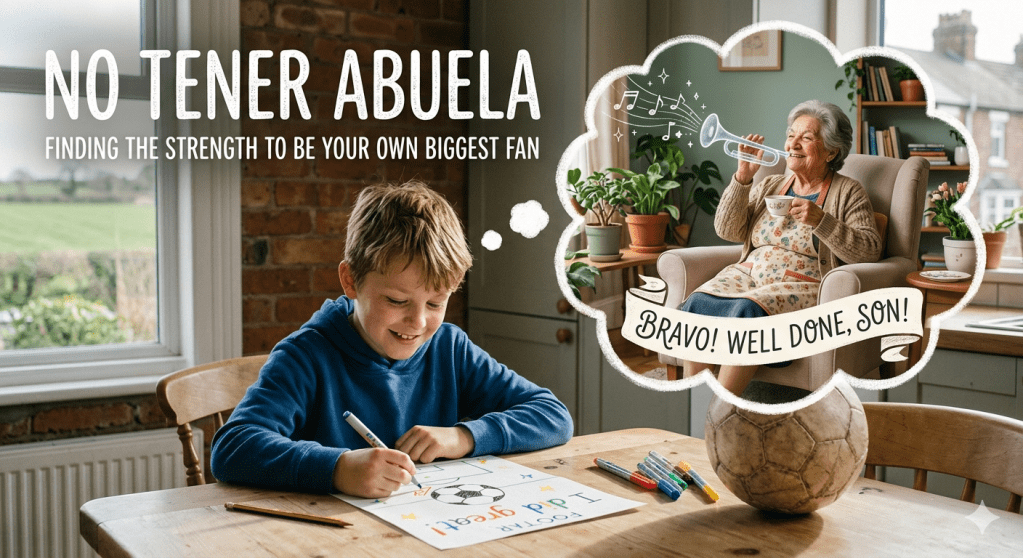
No tener abuela is a light hearted comment made by Spanish speakers to someone who is self-congratulatory. It roughly translates to someone without a grandmother to provide the congratulatory praise so they provide it for themselves.
The concept of no tener abuela can be a cultural lens through which we can re-examine the British relationship with ambition and self-worth. In the UK, particularly within working-class communities, there is a long-standing tradition of policing self-praise. Friedman and Laurison’s work is a good primer on this. Phrases such as ‘too big for your boots’ or ‘your head won’t fit through the door’ are often deployed as a means of maintaining humility. Yet, these cautions can inadvertently create a barrier to personal growth, suggesting that acknowledging one’s success is a form of class betrayal or an act of arrogance.
In reality, learning to be self-congratulatory, especially in the absence of a symbolic, doting grandmother to do it for you, is a sophisticated strand of metacognition. It is the practice of stepping outside oneself to objectively evaluate and celebrate an achievement – even if knowing when to articulate those thoughts is yet another cultural norm to navigate.
Moving beyond material evidence
When we discourage children from thinking or saying ‘I smashed it’, we often force them to look elsewhere for evidence of their success. If a child cannot rely on their own internal voice for validation, they inevitably turn to tangible substitutes:
- Material rewards: stickers, toys, or money.
- Social validation: digital dopamine from likes and shares.
- Outcome-bias: only valuing efforts that result in a ‘win’ or a ‘payday’.
By relying solely on these external markers, we risk fostering a purely transactional relationship with effort. If an achievement does not earn anything visible, a child may begin to view the effort itself as valueless.
The power of internalised praise
The reward for playing a brilliant game of football or tennis should not be restricted to the trophy or the praise from the sidelines. The most enduring reward is the ability to reflect and acknowledge one’s own performance: “Well done, I played excellently.” Whether it is writing a short story at school or volunteering for a charity, children should learn to internalise this praise, finding genuine satisfaction in their own efforts. While they must eventually navigate the cultural nuances of how and when to voice this pride to others, the foundational skill is the ability to validate oneself
Teaching children to share these moments with those close to them, not as a boast but as an honest assessment of their own hard work, is a vital social mobility skillset. It provides a buffer against the pervasive fear of overreaching, allowing them to value the process of improvement even when there is no immediate financial or material reward. By learning to articulate their own value, they cultivate a durable sense of self-worth that remains steady, even when external validation from their community is withheld or actively discouraged.
Self-congratulation as a tool for strength
Developing this internal grandmother is not about vanity: it is about becoming stronger. It is an essential component of self-regulation and mental health. When a person can look at their own performance and find satisfaction without needing an audience, they become less susceptible to the fluctuations of public opinion or the addictive pull of short-term rewards.
We should encourage the next generation to embrace a touch of the grandmotherless spirit. If you have done something great, you should be the first person to recognise it. Valuing the things that lead us to reflect, ‘you did great,’ is the surest way to build a life defined by authentic purpose rather than material accumulation.


