What Cognitive Load Theory needs to consider: not all effort is the same

The application of Cognitive Load Theory (CLT) to teaching and learning premises on quite a straightforward idea: there’s an intrinsic difficulty to learning tasks, often made harder by extraneous load, whether that’s a cluttered slide deck with no dual coding or insufficient worked examples. Clean up the learning event and you can enable all pupils to access the intrinsic learning more efficiently. As the heading of standard 2 says in the Core Content Framework (CCF) for all new teachers, “How [all] Pupils Learn”. Only, it seems, that’s not how all pupils learn. Because learning something new actually takes effort to pay attention. And effort, it seems, is not the singular thing that many seem to think it is.

A new (2024) paper out has targeted this limited understanding of ‘effort’. It is open access and you can read it for yourself here. But it has implications for teachers and how we think about learning so it is important for us to look at their key findings.

The authors divide effort into three key areas.

Effort required by the complexity of the task.

The harder it is, the more effort. We know a lot about this. Not enough difficulty and we become apathetic and demotivated. Too much difficulty and we get disillusioned. This is the area CLT is focused on. Let’s enable pupils to tackle more difficult tasks by reducing the extraneous load and improving their ability to tackle things through worked examples and well designed dual coding.

Effort required to focus (including how much you are averse to focusing on it!)

The continuous focus a task demands is not related to its difficulty. You could be having to complete a large spreadsheet using very similar tasks over and over. Copy and pasting and calculating. It requires focus, but it’s not hard. In fact it’s quite boring. Boring, it seems, requires more effort. It’s painful to have to focus when something is boring. I think we can all think of examples of this one!

Motivational effort

Generally, students are ready to allocate effort if they are motivated. These can be extrinsically motivated via deferred gratification (e.g. qualifications and monetary rewards) and intrinsically motivated such as through epistemic curiosity or prior positive experiences. However, students can also not be motivated by deferred gratification. ImPact’s latest report on pupil absence suggests persistently absent pupils are less motivated by deferred gratification and that a sense of belonging could be more powerful in providing motivation.

To put this into teacher terms and get an understanding of how all 3 types affect a single task with a consistent intrinsic load, let us think about the act of marking and assessment.

To assess a work against criteria, you have to conceptually hold the entire work in your head. This can be quite difficult for longer extended writing pieces with large amounts of information. You also have to have the subject knowledge to assess it whether for subject content or for spelling and grammar. There is an innate and intrinsic difficulty to assessment (sometimes made unnecessarily harder by illegible handwriting and no quiet working space to concentrate on the marking!)

To mark work, you have to focus. That’s actually quite hard for many who have to assess. To mark for one hour takes focus and concentration. It’s tiring and sometimes you are too tired to mark. Sometimes you have to mark huge amounts like during mock examinations or when you are working as an examiner and you are grinding through endless similar answers over and over.

And that leads us to motivation. Remember the days of triple marking and multiple colour pens? Of ‘Verbal Feedback Given’ stamps? Or even today’s double and triple mock examinations where schools are trying to wring extra points out of pupils via exam practice. You might not always be that motivated to mark these. You might feel this should be outsourced (as some schools do) and that a third set of mocks is not spending your time well. You may well really dislike marking, which may be viewed as a tax on your ‘free’ time. Many polls of teachers find this one of the least liked areas of teaching. It’s no secret exam boards struggle to recruit examiners.

And so it’s not enough just to think about the difficulty of marking. You have to think about the need to focus during the act of marking and the motivation needed to do your marking. It’s why we do things like whole class feedback instead of marking whole sets of books. Marking whole sets of books with detailed annotation can require lots of effort even though it is not actually hard to do.

Now reflect on effort in your lessons – the same principles around effort applies to students. We need to think not just about the first area of effort which CLT attempts to optimise, but also the other two areas of focus and motivation. A group of trust leaders told Jon Severs of the TES that a more diverse curriculum with less content to cover (to summarise his meeting with them) might mean students can focus on English and maths more effectively because they have other subjects which they really, and I mean really, enjoy, but more importantly also make them feel part of the school and motivated to enjoy school. We have to see school not just made up of tiny episodes of teaching and learning which all pupils experience in the same way, but as a ‘whole’ school experience for a diverse range of learners who need to be able to generate the three types of effort needed to enjoy and succeed during their time in school.
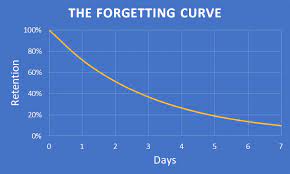
Time to forget Ebbinghaus’ forgetting curve?

Over the last decade, the conversation around cognitive science and psychology in education has grown ever louder, to the point at which these discourses have come to be seen as one of the dominant theories in contemporary education. Much of the discussion focuses on pedagogy including the role of memory and remembering, with theories of learning and teaching being based on the retrieval of information in the long term. Although the ability to remember information accurately is undoubtedly an important aspect of learning, forgetting is an important issue to consider when thinking about learning and seems to be not as widely discussed within education.

This blog will discuss the seminal work by Ebbinghaus and explore its role in the educational conversation and the many iterations of the forgetting curve which have emerged through teachers applying this to pedagogy.

Hermann Ebbinghaus

Ebbinghaus was an experimental psychologist who was interested in finding a mathematical relationship between the elapsed time post learning and forgetting. He conducted a number of experiments in the early 1880s in order to establish this.

In his experiments, Ebbinghaus attempted to learn a row of thirteen nonsense syllables until he was able to freely recall each one in the correct order. After a preset time interval, he would relearn the syllables, given the fact he had forgotten them, until he could once again freely recall each one in the correct order.  

It is important to recognise that Ebbinghaus’ view on forgetting was not a measure of how many syllables that could be recalled after a specific amount of time but the amount of time, or repetitions, it took to relearn the same list of syllables after forgetting. A measure he called savings. Savings can be presented as a decimal or a percentage and is calculated as follows:

If it took someone initially 10 minutes to learn the syllables but it only took them 8 minutes to relearn after a set time then the saving is 2 minutes. Savings is the 2/10 = 0.2

If the relearning took the same amount of time, then the savings would be 0 and if there was perfect recall without relearning, the saving would be 1 or 100%.

The original experimental results have been successfully replicated a number of times, but I am going to use data from the study by Murre and Dros in 2015 (paper can be found here) to discuss the forgetting curve due to the fidelity of their experiment. In their paper, Murre and Dros replicated Ebbinghaus’ experimental procedure and calculated savings using time. The resulting forgetting curve on a linear time scale is shown below:

The curve shows a general exponential decrease in savings. What is interesting is the higher than expected result for 1 day. Ebbinghaus also found this but he was able to fit the data point to the curve generated from his ‘forgetting equation’ so he overlooked this at the time. However, he did replicate, along with other subsequent researchers, this result after the publication of his work. This decrease or ‘slowing’ of forgetting from these experiments is thought to be due to the role of sleep in memory consolidation.

Interestingly, Murre and Dros recorded the number of correct responses (correct syllable in the correct position) during the relearning phases of their experiments. What this showed is that the proportion of correct answers after 20 minutes was marginally above 0.3 and this only decreased slightly at the longer time intervals.

Should we forget the curve?

From a position of experimental psychology the work of Ebbinghaus needs to be studied and remembered as it paved the way for psychology to have robust methods and rigour in the design of experiments that are still used today. The fact that the results of Ebbinghaus have been replicated a number of times is testament to this.

In terms of the educational conversation, it is useful to ask if we actually need a mathematical model (the graph with numbers) to tell us that learners forget. It is clear that what the Ebbinghaus’ forgetting curve does show is that:

1. a high proportion of information that is learnt is rapidly forgotten 

2. the longer you leave before relearning something, the longer it will take you to relearn

I think I would be hard pushed to find a teacher that genuinely would disagree with these statements, with or without knowledge of the curve. The question we ask then, what use does awareness of Ebbinghaus’ curve brings to a teacher beyond the knowledge that forgetting takes place over a period of time after the point of learning?

Certainly, the misinterpretation and misrepresentation of the curve is not helpful. Making claims like “you only remember x% of information after y time” is clearly untrue if you are using Ebbinghaus as your evidence base. Applying ideas like this to education is widely problematic and can result in unhelpful numbered things about forgetting, models like the infamous learning pyramid.

Additionally, there is a danger with using a mathematical model rather than just having good awareness that forgetting takes place and that there are well researched methods to remedy this. For example, we might say we forget 50% of something we have learned within an hour. This sounds plausible and whilst you might worry about all the different permutations, that’s the least of the problems. Using that premise, I could simply say, well I’ll double the information learned at the start and then they won’t forget what I intended them to learn. And of course, the teacher in you will say that’s nonsense.

Being focused on forgetting is a good thing, but it is important to think critically in our application of science just like Ebbinghaus himself was.