Working memory: could it be that it’s just poor resolution rather than 4-7 items?

We’ve all had the lecture. You can only hold so many items in your working memory because there are only so many slots. It’s in the Core Content Framework (CCF) for trainee teachers. It’s in the Early Careers Framework for recently qualified teachers. And it’s in all the NPQs. If I undertake sequence of colour, number, or items of information tests on you then, after between four and seven items, depending on context, you cannot remember the sequence accurately. Here is what it says in the CCF:

And so we break down instructions into small ‘chunks’. We think about capacity all the time and use it for instructional coaching. Granularity is key. But that idea of working memory having a limit, having only so many slots, is not the only idea in psychology. There is another theory which has just as much validity as the fixed idea. An idea that suggested we could be using many more items than 4-7 in teaching and it would still work. Welcome to the world of low resolution memories…

One competing idea is that the limit on capacity is based on resource rather than a fixed number of slots. It’s nothing new – it’s been around as long as the ‘slots’ idea and instead of slots, it says that working memory is a fluid pool of resources. In other words, you can remember a few things with precision, but that when you overload working memory the result isn’t a total failure to remember additional items, but a degradation in the quality of the memory of all eight items. It’s like pouring your working memory into 8 jars instead of 7. It’s spread around more thinly. The more items, the more pixelated (to use a modern term) the memory. If you want sharp resolution, then keep the number lower, if the outline is important and you’ll be adding resolution over time then the detail isn’t so important at the start. For example, an important part of kinesiology is knowing all 206 bones in the human body. But you still start with the skeleton of all 206. You will probably then divide the skeleton up into groups of more than 4-7 bones. You add detail as you go down so that magnitudinally, the memory can zoom out and in as it is needed. In many ways, it makes good sense to start with a very poor pixelated skeleton memory and then build detail up, rather than start with small detail of 4-7 items. Having the ‘whole’ in your memory, no matter how grainy, can work well when adding detail later on and being able to construct the fine detail into the whole picture.

Where else might this begin to make sense in teaching? Well, certainly in English. One of the first things you do before teaching an extended text is to teach students the plot. If you are teaching pupils The Merchant of Venice then you teach students about the pairs of characters, the love interests, the racism, the basic plot around the borrowing of 300 ducats by Bassanio, through his friend Antonio, to pretend to be rich in order to woo Portia (Bassanio really doesn’t come out well in this play), the cross dressing and even the idea that Portia is played by a man who cross dresses back into a man to play the young lawyer. It’s a fiendish plot and one of Shakespeare’s more simple plays! But we absolutely teach the plot first using name tags, bags of gold and solid drama pedagogy. And all those items are not only more than four to seven items but the pupils won’t remember much of it…in great detail. However, as we go through the play and its key scenes, so we will add detail and so that grand plot will come together just like the skeleton with the 206 bones. Once that has happened, then our pupil can zoom in and out of the play examining themes, character evolution and key quotations at ease as they consider the play through the lens of a question. They can recall the large plot of more than 4-7 items and also add detail to each subsection of the plot. This idea is reinforced by one the earlier ideas about resolution rather than slots from this paper by Frick (1988) which found the parsing of knowledge (separating knowledge into items) did not happen as the knowledge entered working memory, but at the point of recall, something he calls the ‘process of recovery’.

Working memory is a finite resource. But rather than see it as restricted to 4-7 parsed slots, begin to see that depending on context and the pupil’s individual strength of working memory, resolution is that which is affected rather than number of items. And then, even further, start to think about delivering something that won’t be recalled immediately in fine detail. Deliver a whole worked example in its entirety first and then go through each section of the worked example in detail.

One issue for us all is why the CCF eschews this contrasting idea of resolution from its literature review. You can still overload working memory, but you are only overloading its ability to create memories with fine resolution. And then Frick would say the parsing happens on the recall, not on the initial learning so there’s further debate there.

There is clearly a place for lower resolution memories in teaching in terms of bigger and more complex sets of data. By adopting the idea of resolution you begin to work with magnitudinal ideas. You can move along the magnitudinal spectrum and allow pupils to zoom in and out of schemata seeing both overarching and complex pictures whilst they are also able to focus and recall fine parsed detail. It’s an important refinement to the idea of working memory and cognitive load and we have to, as teachers, consider how that affects the way we approach our teaching.

Copyright © Dr James Shea and Dr Gareth Bates 2023

Twitter:

Dr James Shea https://twitter.com/englishspecial

Dr Gareth Bates https://twitter.com/smashEDITT

Internal School Avoidance- how pupils avoid paying attention

Photo by SHVETS production on Pexels.com

In the classroom, a pupil uses attentional control to learn. They suppress their other thoughts and instead focus wholly on the thing being taught. Well, that’s the idea. Unless they don’t. And we’ve all been there. Sitting up, listening, tracking the speaker, nodding and wholly zoned out. We are as guilty as any other when it comes to not offering attentional control from time to time.

There are a variety of reasons pupils do this. Sometimes they are quite open about why they are doing it. ‘I’m tired.’, ‘It’s boring’, ‘I already know this’, ‘It’s too hard’ and ‘It’s too hot’ are all things pupils say to us. Sometimes they are discreet about it. They are are slow to get ready, slow to write, only answer questions in simple terms, make little effort in their spoken or written work. They are not paying attentional control. They can do it habitually in every lesson, or only in some lessons and indeed sometimes only for one teacher. There is a ceiling to how much behaviourist approaches to learning can improve this situation. But an issue it is. Because every educator you know will say they see this lack of attentional control on a regular basis from pre-school to post grad. And I want to personally honest here. I’ve been in meetings and talks where I am sitting up, listening, tracking the speaker, nodding and I’m actually away with the fairies. Sometimes my thoughts just go off on tangents. Sometimes I have other things on my mind. I’ve written before about anxiety and the way this affects our working memory and capacity to provide attentional control. If it affects us as adults it most certainly affects children. I have to be clear. I’m not focused on children who are trying hard to provide attentional control despite challenges. Those who have anxiety or other needs which are impairing their attentional control are not the subject of this blog. It is the many who could, but don’t. They waste time, they work slowly, they participate less than they could and they don’t focus their executive function on the learning happening.

A child not paying attention, avoids offering the attentional control required to make learning happen effectively. That avoidance can be space physical (a pre-school child might not want to move from one zone to the carpet zone), it can be subtle physical avoidance (a child might make getting ready to work take so long that the “Do Now” activity time has finished before they started) or it can be mental avoidance (they sit quietly, look at the teacher, track, nod, but make no effort to focus on the actual learning). One of these three things happen in pretty much every lesson I’ve ever observed. It’s incredibly common. However, I want to focus on attentional control avoidance because this countermands everything we are doing as teachers.

Using Baddeley’s model of working memory, the central executive brings together the visuospatial sketchpad and the phonological loop to form memories. However, this happens at a variety of levels. Imagine I am walking down the street thinking to myself. I don’t pay that much attention to the environment around me or the familiar route I am taking. However, I then get to a point where the road is closed blocking my normal route. I then need to find an alternative route in order to continue, it is the central executive that enables me to do this as it ‘switches’ attentional control. Pupils are doing similar things in lessons. They can glide through activities and teacher talk on autopilot – seemingly there, but not paying the level of attention required for strong learning.

We’ve all heard about the new focus on internal truancy. First there was external truancy where pupils skipped schools in unauthorised absences. Then we noticed they were dawdling between lessons, going to the toilets a lot – internal truancy, so we’ve cracked down on that and had numerous debates about locking toilets. But there is a swathe of pupils habitually and frequently not paying attention that are flying under the radar. They use classic avoidance strategies to appear compliant whilst keeping their learning minimised through not paying attention. It is a form of truancy that is so subtle, but it has a similar impact on lost learning. Why are we not cracking down on this as much as external or internal truancy? Because it’s really hard to force someone to pay attention if they don’t want to. It’s why a good teaching assistant is so helpful in a classroom. They can get through to the passive child and help them start to pay attention again. If they pay attention for the child that is not so good as a teaching assistant should not be doing the teaching. But they can intervene to help the child pay attention again.

Photo by World Sikh Organization of Canada on Pexels.com

And are there answers? Well, yes.

I’ve written before about episodic curiosity. When a pupil wants to learn in your subject they apply maximum attentional control to every aspect of learning in your lesson. It absolutely supercharges their progress. You could take the same child and move them to a different teacher or school and they would still be making awesome progress due to that level of attentional control. I recall a pupil bumping along at sub 4 for all of Year 10 and at the end of the academic year they told me they wanted to be a solicitor and asked what English grade they’d need to make this dream happen (needless to say, my answer was a shock to them). What happened next astonished me. They started paying attentional control to every aspect of every English lesson. They asked for and completed extra work. In the exam they scored an 8. I can’t take credit for that learning. But it taught me about the power of having a pupil motivated to learn in my subject. It taught me about epistemic curiosity and how important that is. When I really want to learn something, I really pay attention and the same is true for pupils!

We seem to be focused on cleaning up the cognitive landscape to remove extraneous load. We are using knowledge of studies from psychology to make remembering easier. We are very focused, rightly so, on behaviour. And then we watch child after child, in lesson after lesson, not pay attentional control. And we, as teachers, see it very often. There is a ceiling to CLT in lessons and a ceiling to behaviourist approaches. Those ceilings are that a child can simply withdraw or mute their attentional control. They might as well have 60 days a year off school instead, because that is the impact on the learning of some of those with the most reduced attentional control. There are lots of answers already out there and each pupil is unique and their personal solution might be complex. But until we start focusing on this area, then we are consigning a huge amount of learning hours to the dustbin of internal school avoidance.

Fidelity – why too much of it might be driving teachers out of the profession

Photo by cottonbro studio on Pexels.com

The term fidelity has very much become a contemporary educational buzz word. It can be found in documents from the DfE’s ITT Market Review of Teacher Education to MAT central policies. It’s expected in the delivery of training for the Early Career Framework (ECF) and it is central to many NPQ leadership qualifications. It stems from a central tenet – that the implementation of policy, materials and processes needs to happen as it was intended. I will be clear here that this blog pertains to teaching and learning issues, not issues regarding safeguarding. Safeguarding is an important area and it is intrinsic to good safeguarding that we all follow processes correctly and reliably. This blog refers to communities of practice and how teaching and learning takes place.

We have already seen early rumblings of discontent around fidelity. ECF tutors delivering materials to Early Career Teachers (ECTs) going off-script was very much banned. ECTs should be taught the slides as they were written by the in-house slide authors goes the decree. However, Teacher Tapp’s report into the ECF makes for uncomfortable reading with 65% of primary and 49% of secondary ECTs saying the training doesn’t meet individual teachers’ needs. A clue to the solution for all this is in a little reported statistic that only 6% of ECTs felt that their conversations and interactions with mentors needed to change. Conversations and interactions good – rigidity of scripts and materials not so good.

Lave and Wenger (1991) are well known for their ideas about communities of practice (CoP). It’s quite a straightforward premise – schools, MATs, universities and so forth are communities of practice. The identity of the organisation is made up of interactions between members – called ‘legitimate peripheral participation’. During each participation, each member learns from the other and they also reaffirm their sense of identity within the organisation. Every time a teacher talks to another teacher in the CoP this happens. And your level of mastery within the organisation also counts. Those who have been in the organisation for a long time not only are masters, but are responsible for actions which are more central to the functioning of the community. Further, those who are masters broker the principles and ideas of the community to newcomers and thus ensure the community’s identity is reproduced within the interactions of the newcomers There’s an exchange followed by a reaffirmation (or rejection) of the identity that those in the community hold. It goes further, every time you adapt a resource or produce a resource for the community you undertake a form of reification for the CoP. Imagine, the school is embracing a knowledge rich approach and you produce a booklet which reflects this value within its design. What if the school then buys in another curriculum that replaces your booklet? What if the values that you embedded into your booklet are now not present and yet you are asked to show fidelity to this new ‘master’ author who you have never met and whose work you feel is inferior to your own in delivering good quality teaching to your pupils? You can quickly see how such situations can become quite toxic for those who are used to having interactions within a community. Should you have too many toxic interactions or no interactions at all then you begin to feel disaffected and wish to leave the community.

There are times when new entrants to the community bring new ideas. They may be a senior leader or a regular teacher, but bring challenge to the established ideas of the CoP. Occasional challenge to the CoP’s way of doing things from those within the CoP, whether teacher or senior leader, can be sometimes helpful and is seen, in sociological terms, as an important part of the process of keeping an CoP up to date. Allowing some autonomy and debate is a healthy part of a functioning CoP.

Yet, fidelity is useful. Reification of the principles of an organisation through actions and artefacts is part of the identity of a CoP and the collective vision of a school and its leadership. However, as Wenger warns – too much reification is not so helpful. Too much fidelity can achieve the opposite effect.

Achieving a balance of levels in participation and reification of the CoP is what leaders need to set out to achieve. Excess reification can be an issue. An example would be non-negotiables. ‘All lessons must start with five questions retrieving information from a lesson a year ago, 6 months ago, one month ago and last lesson regardless of the lesson’ (my italics) would be a good example of where adaptation has been removed. Even more, the retrieval might be handed to teachers in workbooks or pre-written slides with an instruction not to adapt. There are a number of issues with that non-negotiable not least from schema theory as well as whether the retrieval of that knowledge (for study purposes) is best placed during valuable teacher time at the start of a lesson on another area of schema. An experienced and knowledgeable teacher should be trusted with the freedom to adapt and, further, also to broker that adaptation to other members of the community.

The downside of removing teacher control is highlighted in a brand new study by Collie and Carol (2023). As teacher control is reduced, teacher workload begins to have a pernicious effect on teachers’ desire to stay in the profession. Their study of 400 teachers demonstrated that there are three profiles: teachers with job control, teachers with some job control and some with vastly reduced job control. They found, “Teachers in the maladaptive and midway profiles also reported greater emotional exhaustion and intentions to quit. The reverse was true for teachers in adaptive profiles – they reported the lowest levels of emotional exhaustion and were least likely to want to quit their job” (Collie and Carol writing in Teacher Magazine).

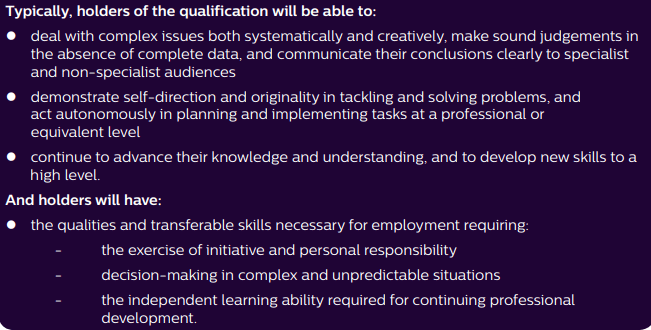
We should also consider that the majority of teachers will hold a L7 qualification in teacher education in the form of a PGCE or PGDE and some will have taken that further and completed an MA. The QAA L7 descriptors set out carefully what such qualified people are able to do: “demonstrate self-direction and originality…act autonomously in planning and implementing tasks…initiative…decision-making in complex and unpredictable situations…” (QAA, 2014).

The problem comes when you prevent such a deeply qualified person from undertaking any of those things in the name of fidelity. Such qualities are valued across the country in sectors other than teaching and so if we don’t take advantage of those qualities, if we don’t enable teachers to participate in their institution and become part of the institution and help broker newcomers to the institution, then they are more likely to leave that school, that MAT and perhaps our profession. The world of work outside of teaching will happily consume potential employees with that level of qualifications, knowledge and skill set in today’s competitive market.

I am fortunate that I work with a wide range of schools and trusts who really value their staff and involve them in the fabric of the school and MAT community. These trusts and their schools are excellent placements for trainees teachers and I am proud to work with them. But they have got the balance of fidelity right – they work hard as a community to decide what they want fidelity to and they allow staff to adapt learning and teaching using their expert knowledge evidenced by their time earned qualifications (which are a proxy for the above characteristics). It’s important we celebrate those trusts and schools as well as point out the weaknesses in insisting on too much fidelity. The cost is considerable if we consider the loss of those excellent and well qualified teachers who end up leaving our MATs and schools; our university teacher education departments and SCITTs; and without whom the teaching profession would be very much worse off.

You can follow Dr James Shea on twitter at @englishspecial