
The secret to well-being for us all in education…

The origin of this theory actually comes from medicine. At our university, we train individuals from the ‘helping’ professions such as teachers, social work, and healthcare professionals including  nurses, midwives and allied health (not good for your league table positions on ‘salaries after five years’, but we just ignore that). This means we’ve got experienced professionals from these fields who have then become academics. It’s a fantastic thing really – these people aren’t traditional academics, but people who’ve forged two careers and stand on the boundary of both. We also share practice across helping professions – there’s a lot of similarities: caring nature, mentoring models, standards, excess work, high stakes accountability, unbelievable stress and so forth.

As part of our enrichment programme in teacher education we wanted to introduce more well-being sessions, but ones that were grounded in theory. So we turned to our healthcare practice colleagues. Podiatrist, Dr Adrienne Sharples duly came and offered a session for the trainees and the session was theoretically quite interesting. Adrienne asked questions like: who is checking their work email in their own time? Who thinks about work outside work hours? And of course all the teachers in the room were putting their hands up. The idea she introduced was ‘bounded empathy‘ – the notion that as caring and empathetic professionals we had not established firm boundaries between our duty to empathise during working time and our ability to switch off this empathy during our own time and subsequently we had ‘unbounded empathy’. Her research demonstrated that those with ‘unbounded empathy’ experience poorer well-being. We become ever more involved in loco parentis as teachers, taking accountability and empathy from our professional persona and bringing it with us, through the boundary to our own persona where it reduces our well-being.

Now that this idea is with us in the teacher education department we’ve taken it further and developed the notion of ‘bounded professionalism’. The reason we are checking work emails, working excess hours and generally sacrificing our personal well-being for the sake of a micro-point on someone’s spreadsheet is not solely due to unbounded empathy. Quite often, the things we are doing in our own time don’t really contribute very much to learning at all. Excess marking, data drops – there’s actually quite a lot we’d happily remove. However, in the teaching and education profession we’ve cultivated a notion of what a professional is like and what a professional does. And a ‘professional’ sacrifices well-being and personal family time in order to ‘do the job to a professional standard’. We’ve got a wholly soft boundary that leeches and leaks from one side to the other. I frequently meet senior managers who think that working 55-65 hour weeks is what is expected of a senior manager and that having a soft boundary, that lets them work all weekend, is expected and that only seeing their family for a limited time at the weekend, let alone during the week, is the ‘price paid’ for being a senior manager. Why should a senior manager give more of their own time than any other professional? Do they deserve less time with their family? They are paid extra because the decisions they take carry more risk for the organisation, not because they do 15 hours extra per week. One reason we haven’t substantially reduced workload in the profession is because senior managers are reluctant to let go of the extra work and ensure bounded professionalism is in place. That attitude then permeates the profession: those who already work 55 hours a week and who then complain about 20 hours a week of winter mock exam marking are seen as not fulfilling their professional demands. Having family commitments is almost seen as unprofessional when they prevent a teacher from pulling enormous hours at pinch points in a year.

As a profession, then, we need to have ‘bounded professionalism’. This means to inhabit your professional persona within firm boundaries. When you exit your professional persona you no longer operate in work mode – checking emails, working on marking or plans. You can move from one persona to the other with your empathy checked and your professionalism checked. There is also a realistic and sensible work loading on this professional persona.

When the work load is too high and the bounded professionalism is too weak, then the only option is to sacrifice well-being in order to meet the excess workload. And we all know the end game of that: they leave their job and sometimes they leave the profession. If they don’t, their well-being and their physical and mental health suffers (and quite possibly their family and relationships). Senior managers and teachers alike have to establish new firm boundaries: turning emails off over the weekend and cultivating a culture of not working on the PC into the late hours. Further, they need to be reviewing the high impact events which can shock the professional boundary – the mock exam season just before Christmas, the endless run of late night open evenings, parent evenings and options evenings or even just weekend emails requesting work. Sitting down and planning directed time means these things can be done and people can have hard professional boundaries. It’s time to reclaim the profession and for all of us to reclaim our well-being.



Toxic teachers and toxic leaders

With a TeacherTapp poll showing two thirds of teachers have worked in a toxic school, the issue of toxicity and teacher retention is ever more important.

During the leadership and management workshops we run with the trainees, one of the concepts we introduce them to is that of toxic workers. The theory is quite simple: in an organisation there are people who work very hard and perform their jobs to an acceptable standard, but whose interactions with others are so toxic that they reduce the productivity of others. In short, their net contribution to the organisation and the profession overall is very poor compared to someone who perhaps does not work as hard, but is a pleasure to collaborate and work with.

When the trainees were invited to say if they’d met such people in their lives prior to entering the profession they all volunteered stories. These stories came from all kinds of professions, but also included schools. Toxic teachers, toxic leaders, toxic managers. And the theory says – toxic people can rise quite well through the systems. The system rewards people who are toxic. This can be from the martyred single person department who does 60 hour weeks with bitterness and moaning and who never collaborates right up to a school leader burning good teachers out of the whole profession in pursuit of an ofsted grade or a P8 score. The end result is the same – the net contribution to the organisation and profession overall is negative and easily outweighs any of the positives generated.

There is much toxicity in education. You see it on edutwitter: ‘edu-trolls’ – deeply criticising and undermining all and sundry whilst seemingly doing good themselves. You see them in teachers, disdainfully dismissing all ideas about education from others, the government, from HEI, from anyone really. Anyone can be toxic and it can take a number of forms.

Communication can be toxic – who are the people you dread emails from? Why do you dread them? Are they passive aggressive? Are they down right rude? Are they ad hominem? Do you write such emails? Are you toxic? We do need to be reflective about our own practice.

Face to face communication can be toxic. In meetings, it’s the same – whose presence do you dread in meetings? Who would you least like to have do a learning walk on you? Who would you rather not do duty with?

Recently, online meetings have been vogue. Toxic practice exists here also. People who dominate the video side with aggressive questioning, people who passively aggressively refuse to turn their videos on when speaking or notice that their video is almost black with lack of light, people who chat in the chat box throughout an important presentation – the list is endless.

Policies can be toxic. Which policies make you despair? No evidence for the policy, focused on ‘what ofsted want’, controlling for the sake of controlling, and so forth. Relentless mock exams with no costing of the hourage spent by teacher who have to mark them. With mock exams, an already busy few weeks have to make room for days and days of marking. Which policies affect your well-being and make you want to leave the school or profession?

Don’t think anyone is immune to toxicity. Senior leaders can end up living in fear of a toxic Ofsted inspector passing a subjective judgement on them, ending their career and causing enormous upheaval to the school community. Those who experience it can suffer PTSD. Toxic people are everywhere and no educational institution, Ofsted included, is free of it.

We are turning the profession around these days – I genuinely believe we have more schools, federations, HEIs, MATs and LAs focused on well-being, work load reduction and a better profession. But we also need to recognise the toxic pollution in our system and be more conscious of it. Not replying all or CCing in someone to an email. Not using passive aggressive language in a meeting. Not formulating a marking policy which makes people leave the profession. Purging the toxic side of Ofsted. Overall, by making the profession a place where new teachers want to stay, not leave.

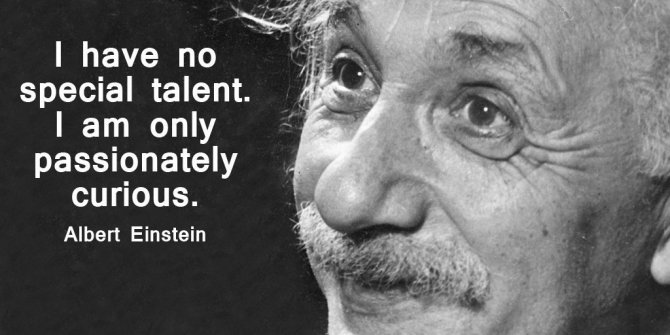
Curiosity and the Curriculum

einstein

With the growing popularity of cognitive load theory (CLT), we are seeing teachers adapt their teaching: removing the irrelevant, the cul de sacs and the diverting tangents from their teaching. Pupils can meet a piece of novel information mid lesson that they can’t locate within their schemas of knowledge and that can overload the working memory. They could also form misconceptions from incorrectly located knowledge.  Yet before all of these fascinating and intriguing diversions are removed from your teaching we’d urge you to pause and consider the nature of self-regulated knowledge acquisition.

When you first hear something on edutwitter or in education that seems to be gaining traction what do you do? Dig a little more? Learn a little more? Well the same happens with pupils. Their epistemic curiosity is driven by trying to locate new knowledge within their current schemas of knowledge. If they are unsuccessful, but still curious, then they accumulate new knowledge to expand a schema or build a new schema so that they are able to locate this new knowledge and further knowledge from the same field. Those intertextual or intersubject references of yours may be sometimes lost on most of the class, but for some of the class those references make them go off and read a new book, watch a film or start reading up on a subject – all wholly self regulated. They may be novices, but they can still be in schema building mode. Litman’s seminal work from 2008 on this divides it into two areas – curiosity and FOMO. Either you simply are curious to know more or others know about it, you don’t and you don’t like that so are driven to find out more.

Curiosity is an innate human characteristic, but it’s also definable. It’s a compelling desire to acquire further knowledge or develop a particular skill. Linked with strong self-regulation it can be ultimately rewarding. If you are designing a curriculum you have to think – am I building this into my teaching? Are you giving them La Grande Permission to go off and independently acquire new knowledge in order to epistemically locate a nugget of knowledge that you have exposed them to?

An inspired child is one happily gorging themselves on your subject; their amplified curiosity pushing them to accumulate new knowledge or abilities beyond that which they are learning in your lessons.  As an English teacher, I knew that children I inspired would be reading and writing beyond that which I was doing in lessons. They were no longer only learning my subject in lessons, my subject had become part of their identity. Accumulating new knowledge and abilities in English was part of their identity and driven by them – in addition to learning the curriculum which I had designed for them. I’m no different. My curiosity in my subject is continuous, self regulated and it forms part of my identity. When I teach, I don’t just pass on knowledge, I also pass on the curiosity that drives the passion for my subject.

There’s a world of self-regulated learning out there for the curious child and any curriculum you design needs to consider how you broker that curiosity to them.