Teacher talk, pace, and behaviour management: symptoms or causes?

Photo by Katerina Holmes on Pexels.com

Whether it’s a discussion about the value of lesson observations, learning walks or the new drift to instructional coaching, there’s been a real shift in the language people use for feedback now. One type of feedback that has caught our attention is the habitual tendency of observers to use nebulous terms which describe symptoms rather than cause.

Let’s take the term ‘teacher talk’. At one time (and early career teachers won’t believe this I’m sure), but OFSTED inspectors used to go around lessons in OFSTED inspections watching teachers teach and then not only would they grade the lesson, but they’d mark the teacher down for too much ‘teacher talk’. In a similar way, some enthusiasts, pushing back once OFSTED backed down from this position started promoting for more ‘teacher talk’. As if either side, with their stopwatches and clipboard are adding anything to a teacher in giving the feedback: ‘too much teacher talk’ or conversely ‘too little teacher talk’.

It is clear we need to stop focusing on the symptom of something like teacher talk and instead focus on finding the cause. Take a classic error from a teacher – not deploying questioning strategies effectively: involving all students, sufficient wait time, targeted questions, supplementary questions, social constructivist questioning, understanding if you are seeking recall of knowledge or if you are constructing new knowledge and so forth. There are many more questioning strategies, of course, but the point is that if you are not good at deploying an evidence informed range of questioning strategies effectively then the voice you’ll hear the most will be your own! The symptom is too much teacher talk – which is a valid observation, but a terrible target or feedback. Instead, you should be accurately identifying what particular aspect of the lesson is causing too much teacher talk and then undertake some form of coaching around that particular area. If, as an experienced teacher, you can see that one of the questioning strategies is being used ineffectively, then you can work with the teacher to bring a focus on how a particular approach to questioning is being used and how to use it more effectively and in keeping with the evidence.

Another key bête noir of ours is the ambiguous term of ‘pace’. If you ever want to ask a teacher to talk for an extended period of time to fill a gap, ask them to explain what ‘pace’ is in teaching. Setting pace as a target is similar to that of teacher talk. It’s a very loose, collective noun for all manner of things which could be done differently. Routines within the classroom is a common issue where an experienced teacher can observe a less experienced teacher and think to themselves – I’ve lots of very small but strategic routines which I use within a lesson, but I’m not seeing such routines here. But pace isn’t just about time spent and routines. Switching back and forth between student-led tasks and teacher-led tasks, or simply switching from one task to another leaves you with transition issues (in particular the running and the end of a timed activity). There’s a reason that teachers call timings through an activity and circulate feverishly at key points during segments within the activity. They are undertaking formative assessment, often allied with adaptation and monitoring progress to squeeze maximum learning from the time pupils are spending on an activity. When an experienced teacher observes a novice teacher they might see missed opportunities to adapt a task for a student to make it harder or easier, or even to drop in some key missing knowledge in a mini-teaching spell. All these things and many others all contribute to what we call ‘pace’. But setting pace as a target is really not helpful – it’s just a symptom. It would be better to focus on small sharp segments of a lesson and discuss individual students, strategies and when to deploy them because then you are focused on the causes instead. What does not work is when an observer can only see symptoms and even worse, when they think the cause is something else.

Even the often-used ‘behaviour management’ or ‘low level disruption’ are still symptoms. Children going off task might be seen as a behaviour management symptom, but the cause could easily be poor instructions, lack of challenge or inconsistent routines – all pedagogical issues (though I do not prescribe to the view that lessons have to be ‘entertaining’ or ‘engaging’ for good behaviour management. They should be cultivating curiosity but that’s another blog). They might not be caused by a lack of familiarity with the school’s behaviour management policy and more to do with routines, pedagogy or simply inexperience. If you’ve never worked or trained in a school that routinely undertakes group work and then you go to do it, then you might find it difficult to manage clear expectations. An experienced teacher knows to put into place for group work, structures such as timings, roles, agendas and very very high expectations about participation as well as ensuring the groups are well selected. As an experienced teacher, you might notice something missing within the pedagogy – the lack of an agenda or explicit timings. Telling someone that they need to work on low level disruption or better behaviour management during the group work isn’t the feedback that is needed. Instead, you would work with them to establish each component of the activity and which is contributing to the symptom of behaviour management.

What is left then, is a clear model. Feedback and coaching should focus on causes, not symptoms. The inexperienced teacher will often quite correctly identify the symptom and an observer communicating the symptoms in their class is not going to be great revelation to them. However, having that forensic focus on the cause of the symptoms is much more helpful for the inexperienced teacher who can then start to develop new strategies in order to target the cause of the symptom.  

Fidelity – why too much of it might be driving teachers out of the profession

Photo by cottonbro studio on Pexels.com

The term fidelity has very much become a contemporary educational buzz word. It can be found in documents from the DfE’s ITT Market Review of Teacher Education to MAT central policies. It’s expected in the delivery of training for the Early Career Framework (ECF) and it is central to many NPQ leadership qualifications. It stems from a central tenet – that the implementation of policy, materials and processes needs to happen as it was intended. I will be clear here that this blog pertains to teaching and learning issues, not issues regarding safeguarding. Safeguarding is an important area and it is intrinsic to good safeguarding that we all follow processes correctly and reliably. This blog refers to communities of practice and how teaching and learning takes place.

We have already seen early rumblings of discontent around fidelity. ECF tutors delivering materials to Early Career Teachers (ECTs) going off-script was very much banned. ECTs should be taught the slides as they were written by the in-house slide authors goes the decree. However, Teacher Tapp’s report into the ECF makes for uncomfortable reading with 65% of primary and 49% of secondary ECTs saying the training doesn’t meet individual teachers’ needs. A clue to the solution for all this is in a little reported statistic that only 6% of ECTs felt that their conversations and interactions with mentors needed to change. Conversations and interactions good – rigidity of scripts and materials not so good.

Lave and Wenger (1991) are well known for their ideas about communities of practice (CoP). It’s quite a straightforward premise – schools, MATs, universities and so forth are communities of practice. The identity of the organisation is made up of interactions between members – called ‘legitimate peripheral participation’. During each participation, each member learns from the other and they also reaffirm their sense of identity within the organisation. Every time a teacher talks to another teacher in the CoP this happens. And your level of mastery within the organisation also counts. Those who have been in the organisation for a long time not only are masters, but are responsible for actions which are more central to the functioning of the community. Further, those who are masters broker the principles and ideas of the community to newcomers and thus ensure the community’s identity is reproduced within the interactions of the newcomers There’s an exchange followed by a reaffirmation (or rejection) of the identity that those in the community hold. It goes further, every time you adapt a resource or produce a resource for the community you undertake a form of reification for the CoP. Imagine, the school is embracing a knowledge rich approach and you produce a booklet which reflects this value within its design. What if the school then buys in another curriculum that replaces your booklet? What if the values that you embedded into your booklet are now not present and yet you are asked to show fidelity to this new ‘master’ author who you have never met and whose work you feel is inferior to your own in delivering good quality teaching to your pupils? You can quickly see how such situations can become quite toxic for those who are used to having interactions within a community. Should you have too many toxic interactions or no interactions at all then you begin to feel disaffected and wish to leave the community.

There are times when new entrants to the community bring new ideas. They may be a senior leader or a regular teacher, but bring challenge to the established ideas of the CoP. Occasional challenge to the CoP’s way of doing things from those within the CoP, whether teacher or senior leader, can be sometimes helpful and is seen, in sociological terms, as an important part of the process of keeping an CoP up to date. Allowing some autonomy and debate is a healthy part of a functioning CoP.

Yet, fidelity is useful. Reification of the principles of an organisation through actions and artefacts is part of the identity of a CoP and the collective vision of a school and its leadership. However, as Wenger warns – too much reification is not so helpful. Too much fidelity can achieve the opposite effect.

Achieving a balance of levels in participation and reification of the CoP is what leaders need to set out to achieve. Excess reification can be an issue. An example would be non-negotiables. ‘All lessons must start with five questions retrieving information from a lesson a year ago, 6 months ago, one month ago and last lesson regardless of the lesson’ (my italics) would be a good example of where adaptation has been removed. Even more, the retrieval might be handed to teachers in workbooks or pre-written slides with an instruction not to adapt. There are a number of issues with that non-negotiable not least from schema theory as well as whether the retrieval of that knowledge (for study purposes) is best placed during valuable teacher time at the start of a lesson on another area of schema. An experienced and knowledgeable teacher should be trusted with the freedom to adapt and, further, also to broker that adaptation to other members of the community.

The downside of removing teacher control is highlighted in a brand new study by Collie and Carol (2023). As teacher control is reduced, teacher workload begins to have a pernicious effect on teachers’ desire to stay in the profession. Their study of 400 teachers demonstrated that there are three profiles: teachers with job control, teachers with some job control and some with vastly reduced job control. They found, “Teachers in the maladaptive and midway profiles also reported greater emotional exhaustion and intentions to quit. The reverse was true for teachers in adaptive profiles – they reported the lowest levels of emotional exhaustion and were least likely to want to quit their job” (Collie and Carol writing in Teacher Magazine).

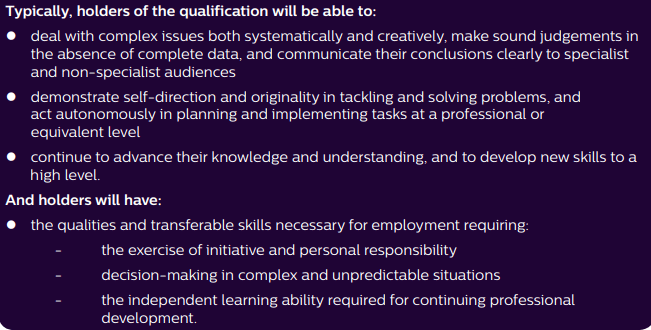
We should also consider that the majority of teachers will hold a L7 qualification in teacher education in the form of a PGCE or PGDE and some will have taken that further and completed an MA. The QAA L7 descriptors set out carefully what such qualified people are able to do: “demonstrate self-direction and originality…act autonomously in planning and implementing tasks…initiative…decision-making in complex and unpredictable situations…” (QAA, 2014).

The problem comes when you prevent such a deeply qualified person from undertaking any of those things in the name of fidelity. Such qualities are valued across the country in sectors other than teaching and so if we don’t take advantage of those qualities, if we don’t enable teachers to participate in their institution and become part of the institution and help broker newcomers to the institution, then they are more likely to leave that school, that MAT and perhaps our profession. The world of work outside of teaching will happily consume potential employees with that level of qualifications, knowledge and skill set in today’s competitive market.

I am fortunate that I work with a wide range of schools and trusts who really value their staff and involve them in the fabric of the school and MAT community. These trusts and their schools are excellent placements for trainees teachers and I am proud to work with them. But they have got the balance of fidelity right – they work hard as a community to decide what they want fidelity to and they allow staff to adapt learning and teaching using their expert knowledge evidenced by their time earned qualifications (which are a proxy for the above characteristics). It’s important we celebrate those trusts and schools as well as point out the weaknesses in insisting on too much fidelity. The cost is considerable if we consider the loss of those excellent and well qualified teachers who end up leaving our MATs and schools; our university teacher education departments and SCITTs; and without whom the teaching profession would be very much worse off.

You can follow Dr James Shea on twitter at @englishspecial

Working memory of teachers – how anxiety affects quality of teaching

We all recall our first foray into teaching as a beginning teacher. Trying to manage the technology of SIMs for the register, meeting and greeting pupils at the door, remembering which childen have specific needs, checking for uniform, managing resources – it seemed to be there were so many things to remember and undertake. And then if you had behavioural issues as well – it could easily all overwhelm you. As experienced teachers, we know that behaviour, interruptions to our classrooms, faulty equipment and so forth, can intervene and make the basic job of teaching and adaptation exceptionally hard. But have you thought about looking at this from the perspective of cognitive science? In particular the focus on working memory?

Working memory has limitations. That’s readily established. It depends on a number of contextual factors, but regardless of those variables, it’s limited. Load it up too much with extraneous load and it stops the basic intrinsic task from being undertaken so easily. We think about this all the time for our pupils, but have we thought about it from the lens of a teacher?

There’s an interesting 2019 paper from Angelidis et al., on how acute cognitive performance anxiety increases threat-interference and impairs working memory performance. It starts from a readily established academic position that we all know about: if you stress about a situational context it affects your ability to do the task. Whether it’s public speaking or playing sport – anxiety can impair the execution. What the paper then goes on to do is to measure working memory using an established psychological test. They then cultivated stress through an established psychological method (ironically, for us as teachers, the stress is created by asking participants to perform a mathematical task whilst receiving scripted negative feedback. Maths anxiety really does need more focus!). What they discovered was that loading up the stress impaired working memory. Now to be clear, the paper acknowledges that it is established academically that some stress is helpful. Too little stress and you underperform. In particular, the focus is on anxiety, not just stress. The paper concludes anxiety is counter-productive to working memory.

Starting from this premise then, you begin to reflect on what teachers use working memory for and what things might impair this capacity. This is in no way comprehensive, but let us look at some basics.

Teachers use working memory to:

1.       Teach – the things we said at the start: managing resources, organising the lesson, asking questions, developing answers and so forth.

2.       To adapt. I separate this out because it relies on constant monitoring of students, how well they are undertaking a task and then intervening and adapting. It happens constantly and continuously as a teacher ensures that adaptation takes place and a feedback rich environment is present.

3.       Recall subject knowledge from long-term memory and apply it to the lesson.

4.       Monitor and manage behaviour. Again, there is a constant focus on behaviour as the teacher scans and ensures attention (and I use that term academically, e.g. attentional control) is maximised throughout the lesson. Very quickly we can see how too much overload, anxiety-related or simple overload could overwhelm working memory here.

5.       Follow non-negotiables. There will be tasks that always have to be followed regardless of the flow of lessons and we note that this is quite the debate in educational circles where they can be seen as unnecessary or interfere with a teacher’s ability to undertake other tasks.

6.       Ensure Ofsted compliance is being followed. I don’t know any teacher who doesn’t think about Ofsted and how they might ‘view’ the things that happen in the classroom. Writing, reading, marking – and if the school is expecting an Ofsted inspection there could be anxiety pushed onto teachers from SLT.

7.       Adult on adult bullying in the school workplace. Hierarchical, horizontal – it doesn’t matter. We all know it exists and is driving teachers from the profession. Half of the stories from that Facebook group for teachers that have left or are leaving the profession cite adult on adult bullying as the cause. That this stress can then impair teacher working memory and thus ability to teach shows that we have to be very careful in this area.

7.       Thinking about the observer’s thoughts before, during and after an observation. Anxiety about an observation can affect the very thing the observer is trying to observe.

8.       Non-teaching things. Let’s be honest here. Teachers are human. They think about divorce, children, bills, cancer, family, relationships, physical and mental health and so forth. These things could be very much related to anxiety and providing what the paper calls ‘threat-interference’ to their working memory capacity.

Quite quickly, we can all see that there are multitudes of stresses and anxiety-inducing factors that could reduce the capacity of a teacher’s working memory. There are also key pinch points in the year where anxiety and stress are high – parents’ evenings or during mock exam marking season for example. All these sources of stress would then have a direct impact on the positive things that we would like teachers to spend that working memory on. But not all stress is bad remember. Reviewing children’s access to learning and introducing adaptation is a healthy stress – it requires careful monitoring and intervention. Creating a feedback rich environment is helpful, but stressful. In a good way. Thinking hard about questions and questioning takes working memory capacity. Recalling subject knowledge really does need working memory capacity and focus and is eminently helpful for the lesson. But if you are trying to cope with poor behaviour then recalling subject knowledge becomes more challenging. If you have anxiety about poor behaviour, even when the behaviour isn’t present, it still affects working memory.

If we are to keep teachers in the profession then we have to focus on the working memory of teachers, not just pupils. We need to think about tackling things like poor behaviour. We need to question ourselves about the helpfulness and accuracy of observations as well as reflect on the impact of the anxiety produced in teachers by Ofsted and even things like non-negotiables. We should be focused on ensuring that things like providing support for teachers going through challenging times with family and health are readily available. Doing things such as these can free up capacity in working memory for the things that really matter in the lesson – the teaching and the adaptation. It’s time to focus on the working memory of teachers, not just pupils.

Dr James Shea https://twitter.com/englishspecial

As part of our ongoing work we periodically undertake research into areas of neuroscience and cognitive science and their application to teaching. If you are interested in being contacted in the future with a view to being a participant, please email james.shea@beds.ac.uk to be placed on a register of interested participants. If a suitable project becomes available in the future you will be contacted and offered an ethically vetted process to give consent to participate.