Should you be hothousing your child for the new baseline entry test for 4-year olds?

boy child childhood happiness

Photo by Pixabay on Pexels.com

I know the controversial base line testing is not due to start until 2020, but believe me, parents of children aged 0-4 years old and parents whose children will be in child care before the age of 4 will be thinking about this test already. The test will come in after the education secretary has said that parents are not preparing children for school properly. And I want to talk about some of the issues around teaching after and preparing for this test.

I love teaching.  At this late stage of the academic year I may be looking at the world through a rose-tinted prosecco glass, but I love the kids in my Key Stage 1 class. I love working with them, their enthusiasm and watching their progress.

I even like some of the parents and I don’t tend to grumble about pay or workload. However, some of the testing I do have issues with.

Phonics Screening check:

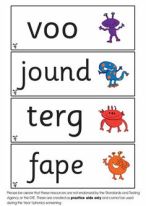
What has this test achieved?  It’s shown me that a 6-year-old child, with an assessed reading age of almost 10, can get five words wrong because they are desperate to make sense of nonsense words with strange alien pictures beside them.
nonsense

It has also shown me that an education system seemingly starved of money, has enough spare cash to finance a visit from an inspector to check your phonics materials are appropriately stored just in case you or the children in your class see the test prior to the launch date and memorize all 40 words.  Oddly, we are trusted to teach the nation’s youth but not to have enough integrity to store a test.

At the end of the day, this is a test that doesn’t tell me anything about a child’s reading ability that can’t be gleaned from hearing them read a book to me as a professionally qualified teacher.

KS1 SATS:

Those teachers lucky enough to teach a combined year 1 and 2 class get hit by the double whammy of phonics testing and the joy of SATS – another thing that parents pay attention to.  Not to mention another year of a narrowed curriculum (something OFSTED acknowledges), which focuses on maths and reading comprehension.

Should a child’s performance even hint at not reaching an expected standard then, in our school, TAs, HLTAs and even the Head Teacher are taking small groups right, left and centre to work on partitioning or reading inference.  Art, music, design and technology?  What year 2 child would want to do those when they can be trapped in a small, sweaty office with someone sequencing the events in a story about foxes and fishermen from 1 – 5?

Hopefully, the new shift in OFSTED’s focus will at least result in the rejuvenation of foundation subjects even if this does mean further change for teachers and an even shorter summer break while we work on the extra planning demands.

Reception Baseline Assessments:

For those of us in Key Stage 1 prepared to stick it out, 2022 – 2023 could see some light at the end of the long dark assessment tunnel.

Key Stage 1 SATS are (probably) being made non-statutory when those four-year olds unfortunate enough to have been subjected to the Reception baseline assessment start to filter through the system.  No matter how this initiative is dressed up, I haven’t spoken to one EYFS teacher yet who agrees with such a thing or even thinks it is necessary.

Surely it will result in those at the competitive end of the parental scale hothousing their toddlers and testing them on their knowledge of number recognition, shape and letters of the alphabet.  No playing in the garden making mud pies for you until you can repeat your alphabet three times! I can see why. Parents want their children to score highly in any assessment and are prepared to do whatever it takes to make that happen. However, just as in education, you can begin to see how an assessment could narrow the curriculum at home as everyone tries to prioritise learning the knowledge of the assessment.

If you think hothousing them is a good thing and can only help us teachers, you’re probably misguided.  For, in my experience, parents do not always approach education in a joined up way with the school. For example, they often tend to teach letter names not sounds. The result: many a Reception teacher will spend a year trying to get them out of this habit and learn their Letters and Sounds phases 1 – 3 instead.

Unfortunately, while primary and lower schools are fielding criticism for narrowing the curriculum to focus on statutory tests the very real danger is home could follow suit for pre-schoolers with this new baseline assessment. We have seen the impact of national assessment on curriculum at all stages of school – what will happen to the curriculum at home with this new national assessment? And if parents are thinking about this assessment that will happen in 2020 – perhaps right now they are also thinking about how they might hothouse their child to do well in this assessment.

I’m looking forward to September already, but in the meantime, I’ll refill my rose-tinted glass of prosecco and enjoy the sunshine …

What happens when you ask your pupils to write 10% braver?

woman sitting on mountain
Photo by Lukas Hartmann on Pexels.com

I observed one of my PGCE English trainees teaching her top set Year 9 all girls group. Following a very inspirational first half of the lesson, where the class really impressed us all with the depth of their comments, reflections and ability to engage with really quite sophisticated ideas through oracy, they then had to take those ideas and express them in written format. What emerged was writing that whilst grammatically correct and stylistically appropriate, lacked the originality and interpretation that had appeared in the earlier oral exchanges. Oracy in English is an important topic and has featured in not only NATE conferences (National Association for the Teaching of English), but is high on the agenda of labour’s vision for education in the second half of the 2020s should it win the next general election. High quality oracy can be a powerful tool in English, but it also needs a good link to powerful writing.

This is a common problem in English lessons. Trying to translate sharp and insightful ideas that emerge at the thinking process through oracy and then trying to capture them in written format. It doesn’t always flow from one to the other and all English teachers work hard on this process with their pupils.

When we were discussing the lesson afterwards I mentioned that I had seen the hashtag #10braver featured in the women’s ed hashtag #WomenEd which I follow on Twitter and that I thought it would be an idea for the PGCE trainee to tell the girls in the class about this movement, to give them their work back and then ask them to rewrite it ‘10% Braver’. She could then ask them to reflect metacognitively afterwards on what the difference was and if they indeed were, as Arsene Wenger would say, playing with the handbrake on. It’s quite a typical strategy for English teachers. You are telling them about real life people using English within their actual lives and asking the pupils to respond just like others in society do.

Now this anecdote makes for a nice story –  this little narrative about my PGCE trainee and the 10% Braver hashtag and I’ve certainly told it a few times. However, having told this story recently to some of my peers they then said – so what happened next? It was a good question. When the trainee was next in I asked her – what happened next? And asked her to write the next bit of this blog.  This is what she wrote:

From my teaching experience to date, one of the most frustrating elements of the classroom environment can be managing the transition from class discussion to extended writing tasks. Often, students will provide wonderful verbal responses to topics which they can then emulate and extend upon. The well coined phrase of ‘but I don’t know what to write’ then rears its head; leaving the teacher wondering if they were in the same room, or indeed, taking part in the same lesson.

Having discussed this with my subject tutor at the university who is keen on educational research and strategies to combat such things, the concept of ‘10% Braver’ was introduced into my teacher toolkit (and is now constantly called upon!). Whilst the suggestion was originally designed to help make the female students in my class take risks in their writing, I have found that is it equally as beneficial to my male students. They also respond to this kind of exhortation feedback.

Returning to the original class, below is a sample of work taken from a female student in year 10; the italicised response is the 10% braver piece of writing – I have also included some student voice reflection about why she felt empowered.

‘Within this extract Shakespeare presents the relationship between the witches and Macbeth as disrespectful. This is shown when Macbeth says ‘midnight hags!’ The use of the exclamation mark suggests that he is shouting at the witches. Also, the use of the noun ‘hags’ shows Macbeth has no respect for the witches identity.

This negative bond is shown further on in the extract when Macbeth says to the witches ‘I charge you.’ This shows there is an imbalance of power between them and implies that Macbeth wants ultimate power of them.’

[The work was then peer assessed and reviewed by the teacher – the target was: to be ‘10% Braver’ in her response.]

‘This is implied with the verb ‘speak’ because it is a very demanding tone of language. Also, it suggests he doesn’t treat them with respect as ‘speak’ includes a plosive which gives a harsh/nasty sound to the Macbeth speech.’

When asked about the impact of the feedback, the student said: ‘I felt 10% Braver writing my target response because I was encouraged by my peers and my teacher. This gave me the confidence to go outside of my comfort zone and express my opinions within my writing. Usually, what stops me from writing like this is that I don’t want to write the ‘wrong’ thing within my answer. By someone saying ‘do it,’ it boosts my confidence and makes me believe in myself.’

As an ITE educator and as an English teacher, I think this shows that we need to think about how we get pupils to express their ideas, about how the pressure of performance works and what it is they are trying to avoid as much as they are trying to achieve. In the blog, 10 things they hate about your subject, I was trying to unpick ‘large’ issues with performance. What I think this blog shows is that there are micro-performance issues happening at all sorts of levels: from the Year 10 English classroom right up to senior leaders in education. The nature of high stakes in modern life is holding many back from achieving and expressing what they really want to say and do. There’s a message here. We need to start getting everyone in education to be 10% braver.

passmores

A curriculum for the white working class

WWC Boys

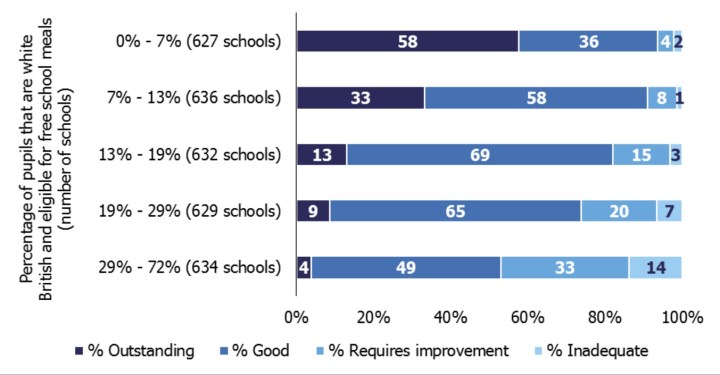
Recently there has been tensions between the Heads’ Roundtable and OFSTED over the alleged existence of system bias against schools with large numbers of white working class pupils. OFSTED has rejected this interpretation of the data and further clarified some of the data used in the original piece. They say that they acknowledge ‘factors’ that make it harder for these schools such as not being close to art galleries and museums and working with monocultural communities. Amanda Spielman has waded into the argument accusing this cultural group of people as ‘lacking aspirations and drive’ in particular when compared to migrants to the country.

Heady stuff indeed. However, we can hardly be surprised when schools are partly measured by how well the pupils achieve the specific knowledge that is defined by GCSEs (Outstanding schools especially). Why does OFSTED give some schools lower grades? Because it measures schools partly on their ability to deliver the knowledge based outcomes of GCSEs and, according to the Chief Inspector, these schools’ cohorts and families do not aspire to achieve them – as evidenced by their own interpretation.

Ofsted grades

OFSTED says schools whose cohorts cannot (will not?) achieve these outcomes are offering an inferior education and so this justifies them being  downgraded. They acknowledge the difficulties in hiring staff, in countering factors, but retain the right to downgrade these schools.

A child will learn from the culture that they grow up in what kind of knowledge will be helpful to them, or is valued within that community –  and what knowledge is a waste of their time. They then aspire to achieve that knowledge which is valued. Their parents’ opinions,  based on the knowledge & experience that their parents have, will also be influential as will the school teachers that they meet and experience. Contextual events might also affect these aspirations. The loss of local manufacturing jobs could influence families to reconsider a career in manufacturing for their child. Aspirations are a complex thing.

So, it isn’t that the white working class are not aspirational. They are perhaps, just not aspiring to develop knowledge of the curriculum being offered to them. Schools do not have the freedom to offer an alternative range of curricula due to accountability frameworks. And then, even despite their best efforts, they are still being told they are not meeting the requirements of the system – to make large numbers of white working class pupils aspire to develop the knowledge identified by OFSTED.
This possibly brings us back to curriculum design. Certainly, this point has been raised before: e.g. @paulgarvey4

Paul Garvey

If we are trying to select, with more detail, knowledge for the curriculum, then we have to have more debate about what this knowledge is. I’ve already written about how we need to develop more tacit knowledge rather than just explicit knowledge. But it goes further. Pupils are learning knowledge from their cultures. They are learning knowledge from their online interactions with others. They are learning knowledge from electronic stores of knowledge with direct instruction built in – YouTube features so many of these (and I have issues with some of this learning which I have written about in my book). We are making value judgments about this knowledge, so that we only value very specific domains of knowledge as being suitable for assessing pupils and schools. Much of what we should be doing is building curriculua that go further than  they  do currently –  as OFSTED duly acknowledge. We should be working with pupils on ways to acquire knowledge, to evaluate knowledge, to build new knowledge, to transpose knowledge to new contexts and so forth.

Yet, the moment you stipulate one curriculum over another, to recognise the value that either academic or non-academic knowledge has, then you run into issues. Many that I speak to tear themselves in two over this. Is an alternative curriculum like that offered in Germany  one of  low expectations (a technical education) or is it a suitable curriculum (they culturally aspire to achieve it)? Who chooses the curriculum that a child studies? If a school says, we are an academic school, don’t send your pupil here if that is not what you want for your child: is that acceptable? What if the child has a Special Educational Need or Disability?

passmores

Who decides what an appropriate curriculum is for the children of taxpayers? Is it the government of the day? OFSTED? The schools? The parents? I don’t think we have the answers yet and downgrading the OFSTED rating of schools serving these communities just seems to encourage schools to reject specific types of pupils in the hope that it will benefit their potential OFSTED outcomes. As Stephen Tierney says, it is career-ending suicide to take on leadership of some of these schools. That doesn’t sound like we have got it right to me.