
Lockdown Learning for Schools in September

red and white signage
Photo by Anna Shvets on Pexels.com

When the lockdown came for us in teacher education here at UOB towers, it was like we had been building up to this, technologically, for some time. Little did we realise it, but the past two years that we had been piloting webinars, developing online teaching pedagogies and moving face to face delivery to online delivery were going to become very relevant. The reason we were developing this was quite simple: mentors having to drive a long distance to mentor development face to face sessions were delighted to sit and have a webinar from home instead with a cup of tea beside them and with no commuting. We had just started to experiment using the flexibilities offered by this technology with some of our trainees when the university shut its doors for COVID19 and our entire programme, overnight, moved online. The same content got taught at the time it was scheduled. Live and exceptionally well attended webinars replaced face to face sessions and it was as seamless as switch as you could imagine. From the trainees’ end, this was a bit of a shock (they relied on the physical library more than I thought), but to their credit they have been very resilient despite the challenges of losing physical interaction with their peers and tutors as well as a change in approach to teaching. No matter what we try to do as tutors, we cannot replicate the live synchronous and emotive experience of learning that happened in the physical classroom (I am from the reader response school of thought) and I think we all see the online version as an inferior substitute to the real thing. Though, to be fair to online live webinars, there are some sessions which have proved to better suited to webinars – ‘preparation for assignment’ type seminars where thinking time, intense question and answer sessions and the ability to record everything have proved to be a superior model.

We are fortunate in our School of Teacher Education to have well designed Virtual Learning Environment technology underpinning our delivery. Technology that was designed and used to deliver taught and assessed units within courses (as opposed to Zoom etc., being designed for business). The students, as I said, overnight, have remained enrolled in units, enrolled on courses and ‘attending’ designated sessions as timetabled. The staff are teaching as much as they ever were and apart from some tricky assessment modifications we’ve by and large ensured that the trainees have had a smooth transition in terms of academic input. This shows that we are benefiting from the level of technological infrastructure in homes, with trainees and with the university. Indeed, business and charities are in a similar position – the flexibility of technology has enabled us all to deploy social distancing as a strategy to push back against the R rate.

Thinking about schools now, it is clear that the way forward will be an adherence to the current rule no unnecessary close social interactions. If you can work from home or learn from home using the flexibility of technology you should and alternatively if you can run your business or attend somewhere with social distancing then you can do that. That’s the way the UK has chosen to keep R down (there are other models: Sweden, South Korea and so forth). Some people have to go to a workplace and more people will go back to a workplace as they open up with social distancing in place, but some people can continue to work from home. The same doesn’t quite apply to pupils in schools. Most pupils will have to go to school and be taught via traditional pedagogies by teachers in face to face sessions for some of the time if not all of the time. In the classrooms, social distancing  can and will have to be practiced (due to smaller numbers in school through rota systems). Some pupils will learn online effectively, because they have the environment and technology to do so. Some pupils who could stay at home will go to school because they don’t have the learning environment to learn from home. Those pupils who can learn from home will be taught by teachers using online pedagogies to supplement the face to face teaching. Teachers and schools from September will need to be able to teach face to face and to teach online. What teachers and schools are doing, on behalf of the government, is deploying the flexibility offered by technology to reduce social interactions. It could be that once the R rate comes down and test and trace becomes much better in terms of its success rate that the government will switch to an approach where social interaction is not so heavily repressed, but until we see the infection rate come down and the test and trace capacity increase we have to think about logistics based on current approaches.

My job as a course leader of teacher education is to ensure that the teachers coming in can teach online as well as face to face. We are already doing this for the outgoing cohort. They would normally have run a face to face ResearchEd style conference to finish the course. This year, they will run that conference as an online conference. Live webinars will replace the keynotes and the breakout presentations. They will put on an entire day of live webinar based learning for each other. We are already looking to enhance next year’s cohort’s knowledge of TEAMS and so forth as part of our planning.

When I look to the future (as someone who has written frequently about technology in education), I can see that blended learning is about to become a reality for everyone. You can have social distancing in schools because you must – for those who will attend school. You can have live teaching online because you must – for those who can study from home for some of the time. I know that live webinars are not as good as face to face sessions, but that’s not the important part right now. What’s important is to keep unnecessary social interactions to a minimum whilst maximising safeguarding and education.  There will be regional variations as well – schools and parents in an area seeing a rise in transmission could expect to be placed back on extensive lockdown. Teachers will be, for next year at least, waiting for the COVID19 phone call as opposed to the OFSTED call.
Rosenblatt’s Principles of Instruction

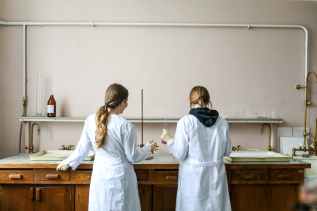
women in white laboratory gown standing
Photo by Polina Tankilevitch on Pexels.com

You might be familiar with Rosenshine’s Principles of Instruction, but are you are aware that the similarly named Rosenblatt also had principles of instruction some 60 years earlier? In the interest of revisiting educational history, Rosenblatt’s principles are as interesting to review as Rosenshine’s.

To start with, Louise Rosenblatt didn’t collect her own principles together. They were spread out amongst her seminal work on transactional theories of literature and Probst put them together. Indeed her most famous text from 1938, Literature as Exploration, is still in print . These principles emanate from the teaching of English (she is best known for the concept of ‘Reader Response’), but the principles can also be explored through the lens of other subjects by considering the notions of epistemic curiosity (Litman, 2008). The main principle to note here is that there is an element of the learning that cannot be placed in a knowledge organiser and cannot be directly instructed for. In English we refer to it as reader response. The idea that every person’s experience of the text is unique. The text sits alone until a reader comes along and consumes it. In doing so, they have an experience. That experience then makes up part of the meaning of the text. So, let’s look at the Rosenblatt’s principles of instruction as put together by Probst (1987).

Thus, you can see how it contributes to contemporary debates over knowledge, “knowledge…is not something to be found, not something the teacher can give to the student…”. Here, I don’t mean that one cannot organise and plan knowledge for lessons – planning and organising knowledge ahead of a lesson is a very good approach to teaching. I am saying that not all knowledge can be organised and planned for in lessons. For English, this is fairly well enshrined in our subject. Each student, when writing about literature, will offer a personal response over and above those efferent aspects of the text that the teacher can plan and teach to the student. It’s not enough, in English, for the student to learn about characters, plots, contexts and themes in literature: they must also personally respond to it. Take the recent real life story about Lord of the Flies – it makes people question their response to the original text. Do humans forever have a touch of the animal within them? Or is it not so inevitable? Our personal response when we read the text forms part of the meaning of the text. And further, that meaning changes as we change and the world changes.

The next step I want to take this to is as a lens through which to look at other subjects. Litman writes extensively about epistemic curiosity. Both the desire to learn more about something one is passionate about and also the desire to fill a perceived gap in knowledge. When learning within a subject, experiences happen. These experiences also feed into epistemic curiosity. The reader response can therefore be applied to other aspects of the curriculum. When learning about the horrors of slavery or the civil rights era, many of us felt compelled to know more. Sometimes, as Litman points out, that compelling need is because we feel a deficit of knowledge. We feel it is important to know more about this topic. It drives our own self-regulated learning with the metacognitive engine running at full speed. On other occasions, a teacher might expose you to a topic and you find it compelling. I still recall the experience of being taught the Norfolk crop rotation method from medieval history in year 9 and deciding I wanted to find out more – independently.

The concepts behind Rosenblatt’s principles of instruction therefore play an important part in a teacher’s planning. When is this going to happen in the lesson? How can we use discussion to facilitate this ‘experience’ and response. It’s not enough to learn that knowledge which we have planned for them to learn. There is more – the experience of learning that knowledge and then further: what is that experience like? By this, I don’t mean gimmicky things which makes a lesson ‘interesting’ – I’m on record as saying our subjects are interesting in their own rights. But that ‘interesting’ actually means it feeds into curiosity. What we want to achieve in our lessons is an experience where the students themselves find our subject interesting and that bits of our subject knowledge are attached to these experiences of curiosity.

I’m interested to know how other subjects approach this unique idea of the triangulation between the student, the knowledge and the experience. I have written before that knowledge alone is insufficient (see our article on Disposable Knowledge). When learning knowledge, students will have an experience of learning that knowledge and that experience becomes part of the knowledge. We can’t say in advance what that experience will be, but it is something we can plan for and even look to enhance.


Fast reading and fast readers

“But the privations, or rather the hardships, of Lowood lessened. Spring drew on: she was indeed already come; the frosts of winter had ceased; its snows were melted, its cutting winds ameliorated.”

(Charlotte Brontë, Jayne Eyre)

I always recall the word ameliorated as it turned up in Jane Eyre when I studied it for A level. ‘What an unusual word,’ I remember thinking at the time. Clearly it means the weather improved or changed. An unusual word and it drew attention to the pathetic fallacy in the text reflecting the shifting plot. If I was reading it out aloud I’d add a spring like tone to the sound of it to add a reading cue for the listener. This is why when we listen to good readers we understand the meaning more efficiently.

What happened there was inference. As a reader, motoring through the text at full speed you meet uncommon words. You may, as was the case with me at the time, be meeting the word for the first time. However, most times, with a combination of grammar and reading cues, you can decode enough of the meaning to continue reading without pausing to look the word up. This is a very specific reading skill which overcomes the raised extraneous and intrinsic load of meeting a new word whilst reading at pace. Decoding and inference at pace is what you need to be able to do in order to be a reader who can switch to different texts at ease – older texts, texts from other countries, texts in translation, texts with stylistic adaptations for effect and so forth.

Now I say all this because recently an interesting paper garnered attention in the English teaching community. The paper focused on what it called ‘fast reading’. It’s an unfortunate phrase that gives you the image of a teacher rattling through a text at speed. In fact, it means a teacher reading without interruption, without popcorning to other children in the class, without pausing to discuss the impending doom captured by the cleverly inserted pathetic fallacy, but instead consciously embedding tone and emphasis which provide reading cues. There is much merit in this – fast reading will help children decode and infer at speed and be able to use this ability to infer meaning when reading other new texts for themselves. You would, of course, then still be wise to explicitly teach inference at pace amongst other aspects of the teaching of inference. Teaching inference is a large part of what an English teacher does and is rooted in reading, listening and in processing the language with sophistication.

All good so far, what’s the issue? Well, one thing teachers have taken to is pre-teaching vocabulary before a chapter. This means the teacher will pre-read the chapter, identify the new words likely to trip up the readers and then pre-teach them before the reading of the text. This removes the extraneous load of meeting a new word and therefore makes the reading experience have a lower intrinsic load. You can see here the immediate issue – the pupils aren’t developing the decoding and inference skills needed to process new words at speed in fast reading. Pre-teaching vocabulary isn’t transferable to a new text. A pupil can’t pre-read a chapter, identify the new words then pre-teach themselves the words before reading the chapter again.

The answer is complicated again. There are times when a word can be solved by grammar or reading cues to a strong enough degree. The reader has to be able to decipher the words to the degree needed to function. I could read, ‘The nearest elder, a Ntask, was still several miles away…’ I can see the unusual word ‘Ntask’ is a proper noun, a name of an elder, this person might have some kind of rank, status or gender, but in terms of reading I can carry on without needing to stop and start looking this up. If, however, the sentence becomes impenetrable and my reading is wholly arrested by my inability to decode a word I might stop, lightly hold my finger on the word and my kindle would very kindly pop up a definition of the word including ‘in usage’.

Now, in an English class, the reality is I can’t simply hold my finger on the word because we have paper books and I have a whole class of pupil readers with me. So there will be times when I pre-teach vocabulary. There will be times when I do pause at a new word with the class and quickly teach the inference needed to decode the word. I have got to expose them to the raised intrinsic load which has been delivered by the raised extraneous load and then teach them how to resolve this using decoding and inference.

Inference itself goes much deeper than this light touch analysis. We are English teachers and we can pause and dwell on a passage before going ever and ever deeper into a text. But at the same time, we must be careful to not think that removing extraneous load in reading is always helpful. In some instances, it removes intrinsic load and the pupil never gets to develop the transferable knowledge and skill necessary to read at speed in such a way that it brokers them to other texts.

Our challenge, as English teachers, is not to teach them solely for the measurable now, but also for the unmeasurable future. A time when we hope our former pupils are enjoying reading a wide range of new and challenging texts for themselves as adult readers.