
Lockdown Learning for Schools in September

red and white signage
Photo by Anna Shvets on Pexels.com

When the lockdown came for us in teacher education here at UOB towers, it was like we had been building up to this, technologically, for some time. Little did we realise it, but the past two years that we had been piloting webinars, developing online teaching pedagogies and moving face to face delivery to online delivery were going to become very relevant. The reason we were developing this was quite simple: mentors having to drive a long distance to mentor development face to face sessions were delighted to sit and have a webinar from home instead with a cup of tea beside them and with no commuting. We had just started to experiment using the flexibilities offered by this technology with some of our trainees when the university shut its doors for COVID19 and our entire programme, overnight, moved online. The same content got taught at the time it was scheduled. Live and exceptionally well attended webinars replaced face to face sessions and it was as seamless as switch as you could imagine. From the trainees’ end, this was a bit of a shock (they relied on the physical library more than I thought), but to their credit they have been very resilient despite the challenges of losing physical interaction with their peers and tutors as well as a change in approach to teaching. No matter what we try to do as tutors, we cannot replicate the live synchronous and emotive experience of learning that happened in the physical classroom (I am from the reader response school of thought) and I think we all see the online version as an inferior substitute to the real thing. Though, to be fair to online live webinars, there are some sessions which have proved to better suited to webinars – ‘preparation for assignment’ type seminars where thinking time, intense question and answer sessions and the ability to record everything have proved to be a superior model.

We are fortunate in our School of Teacher Education to have well designed Virtual Learning Environment technology underpinning our delivery. Technology that was designed and used to deliver taught and assessed units within courses (as opposed to Zoom etc., being designed for business). The students, as I said, overnight, have remained enrolled in units, enrolled on courses and ‘attending’ designated sessions as timetabled. The staff are teaching as much as they ever were and apart from some tricky assessment modifications we’ve by and large ensured that the trainees have had a smooth transition in terms of academic input. This shows that we are benefiting from the level of technological infrastructure in homes, with trainees and with the university. Indeed, business and charities are in a similar position – the flexibility of technology has enabled us all to deploy social distancing as a strategy to push back against the R rate.

Thinking about schools now, it is clear that the way forward will be an adherence to the current rule no unnecessary close social interactions. If you can work from home or learn from home using the flexibility of technology you should and alternatively if you can run your business or attend somewhere with social distancing then you can do that. That’s the way the UK has chosen to keep R down (there are other models: Sweden, South Korea and so forth). Some people have to go to a workplace and more people will go back to a workplace as they open up with social distancing in place, but some people can continue to work from home. The same doesn’t quite apply to pupils in schools. Most pupils will have to go to school and be taught via traditional pedagogies by teachers in face to face sessions for some of the time if not all of the time. In the classrooms, social distancing  can and will have to be practiced (due to smaller numbers in school through rota systems). Some pupils will learn online effectively, because they have the environment and technology to do so. Some pupils who could stay at home will go to school because they don’t have the learning environment to learn from home. Those pupils who can learn from home will be taught by teachers using online pedagogies to supplement the face to face teaching. Teachers and schools from September will need to be able to teach face to face and to teach online. What teachers and schools are doing, on behalf of the government, is deploying the flexibility offered by technology to reduce social interactions. It could be that once the R rate comes down and test and trace becomes much better in terms of its success rate that the government will switch to an approach where social interaction is not so heavily repressed, but until we see the infection rate come down and the test and trace capacity increase we have to think about logistics based on current approaches.

My job as a course leader of teacher education is to ensure that the teachers coming in can teach online as well as face to face. We are already doing this for the outgoing cohort. They would normally have run a face to face ResearchEd style conference to finish the course. This year, they will run that conference as an online conference. Live webinars will replace the keynotes and the breakout presentations. They will put on an entire day of live webinar based learning for each other. We are already looking to enhance next year’s cohort’s knowledge of TEAMS and so forth as part of our planning.

When I look to the future (as someone who has written frequently about technology in education), I can see that blended learning is about to become a reality for everyone. You can have social distancing in schools because you must – for those who will attend school. You can have live teaching online because you must – for those who can study from home for some of the time. I know that live webinars are not as good as face to face sessions, but that’s not the important part right now. What’s important is to keep unnecessary social interactions to a minimum whilst maximising safeguarding and education.  There will be regional variations as well – schools and parents in an area seeing a rise in transmission could expect to be placed back on extensive lockdown. Teachers will be, for next year at least, waiting for the COVID19 phone call as opposed to the OFSTED call.
Rosenblatt’s Principles of Instruction

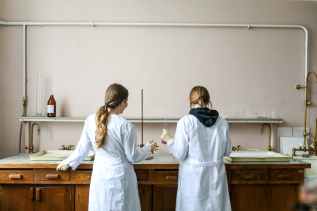
women in white laboratory gown standing
Photo by Polina Tankilevitch on Pexels.com

You might be familiar with Rosenshine’s Principles of Instruction, but are you are aware that the similarly named Rosenblatt also had principles of instruction some 60 years earlier? In the interest of revisiting educational history, Rosenblatt’s principles are as interesting to review as Rosenshine’s.

To start with, Louise Rosenblatt didn’t collect her own principles together. They were spread out amongst her seminal work on transactional theories of literature and Probst put them together. Indeed her most famous text from 1938, Literature as Exploration, is still in print . These principles emanate from the teaching of English (she is best known for the concept of ‘Reader Response’), but the principles can also be explored through the lens of other subjects by considering the notions of epistemic curiosity (Litman, 2008). The main principle to note here is that there is an element of the learning that cannot be placed in a knowledge organiser and cannot be directly instructed for. In English we refer to it as reader response. The idea that every person’s experience of the text is unique. The text sits alone until a reader comes along and consumes it. In doing so, they have an experience. That experience then makes up part of the meaning of the text. So, let’s look at the Rosenblatt’s principles of instruction as put together by Probst (1987).

Thus, you can see how it contributes to contemporary debates over knowledge, “knowledge…is not something to be found, not something the teacher can give to the student…”. Here, I don’t mean that one cannot organise and plan knowledge for lessons – planning and organising knowledge ahead of a lesson is a very good approach to teaching. I am saying that not all knowledge can be organised and planned for in lessons. For English, this is fairly well enshrined in our subject. Each student, when writing about literature, will offer a personal response over and above those efferent aspects of the text that the teacher can plan and teach to the student. It’s not enough, in English, for the student to learn about characters, plots, contexts and themes in literature: they must also personally respond to it. Take the recent real life story about Lord of the Flies – it makes people question their response to the original text. Do humans forever have a touch of the animal within them? Or is it not so inevitable? Our personal response when we read the text forms part of the meaning of the text. And further, that meaning changes as we change and the world changes.

The next step I want to take this to is as a lens through which to look at other subjects. Litman writes extensively about epistemic curiosity. Both the desire to learn more about something one is passionate about and also the desire to fill a perceived gap in knowledge. When learning within a subject, experiences happen. These experiences also feed into epistemic curiosity. The reader response can therefore be applied to other aspects of the curriculum. When learning about the horrors of slavery or the civil rights era, many of us felt compelled to know more. Sometimes, as Litman points out, that compelling need is because we feel a deficit of knowledge. We feel it is important to know more about this topic. It drives our own self-regulated learning with the metacognitive engine running at full speed. On other occasions, a teacher might expose you to a topic and you find it compelling. I still recall the experience of being taught the Norfolk crop rotation method from medieval history in year 9 and deciding I wanted to find out more – independently.

The concepts behind Rosenblatt’s principles of instruction therefore play an important part in a teacher’s planning. When is this going to happen in the lesson? How can we use discussion to facilitate this ‘experience’ and response. It’s not enough to learn that knowledge which we have planned for them to learn. There is more – the experience of learning that knowledge and then further: what is that experience like? By this, I don’t mean gimmicky things which makes a lesson ‘interesting’ – I’m on record as saying our subjects are interesting in their own rights. But that ‘interesting’ actually means it feeds into curiosity. What we want to achieve in our lessons is an experience where the students themselves find our subject interesting and that bits of our subject knowledge are attached to these experiences of curiosity.

I’m interested to know how other subjects approach this unique idea of the triangulation between the student, the knowledge and the experience. I have written before that knowledge alone is insufficient (see our article on Disposable Knowledge). When learning knowledge, students will have an experience of learning that knowledge and that experience becomes part of the knowledge. We can’t say in advance what that experience will be, but it is something we can plan for and even look to enhance.


The secret to well-being for us all in education…

The origin of this theory actually comes from medicine. At our university, we train individuals from the ‘helping’ professions such as teachers, social work, and healthcare professionals including  nurses, midwives and allied health (not good for your league table positions on ‘salaries after five years’, but we just ignore that). This means we’ve got experienced professionals from these fields who have then become academics. It’s a fantastic thing really – these people aren’t traditional academics, but people who’ve forged two careers and stand on the boundary of both. We also share practice across helping professions – there’s a lot of similarities: caring nature, mentoring models, standards, excess work, high stakes accountability, unbelievable stress and so forth.

As part of our enrichment programme in teacher education we wanted to introduce more well-being sessions, but ones that were grounded in theory. So we turned to our healthcare practice colleagues. Podiatrist, Dr Adrienne Sharples duly came and offered a session for the trainees and the session was theoretically quite interesting. Adrienne asked questions like: who is checking their work email in their own time? Who thinks about work outside work hours? And of course all the teachers in the room were putting their hands up. The idea she introduced was ‘bounded empathy‘ – the notion that as caring and empathetic professionals we had not established firm boundaries between our duty to empathise during working time and our ability to switch off this empathy during our own time and subsequently we had ‘unbounded empathy’. Her research demonstrated that those with ‘unbounded empathy’ experience poorer well-being. We become ever more involved in loco parentis as teachers, taking accountability and empathy from our professional persona and bringing it with us, through the boundary to our own persona where it reduces our well-being.

Now that this idea is with us in the teacher education department we’ve taken it further and developed the notion of ‘bounded professionalism’. The reason we are checking work emails, working excess hours and generally sacrificing our personal well-being for the sake of a micro-point on someone’s spreadsheet is not solely due to unbounded empathy. Quite often, the things we are doing in our own time don’t really contribute very much to learning at all. Excess marking, data drops – there’s actually quite a lot we’d happily remove. However, in the teaching and education profession we’ve cultivated a notion of what a professional is like and what a professional does. And a ‘professional’ sacrifices well-being and personal family time in order to ‘do the job to a professional standard’. We’ve got a wholly soft boundary that leeches and leaks from one side to the other. I frequently meet senior managers who think that working 55-65 hour weeks is what is expected of a senior manager and that having a soft boundary, that lets them work all weekend, is expected and that only seeing their family for a limited time at the weekend, let alone during the week, is the ‘price paid’ for being a senior manager. Why should a senior manager give more of their own time than any other professional? Do they deserve less time with their family? They are paid extra because the decisions they take carry more risk for the organisation, not because they do 15 hours extra per week. One reason we haven’t substantially reduced workload in the profession is because senior managers are reluctant to let go of the extra work and ensure bounded professionalism is in place. That attitude then permeates the profession: those who already work 55 hours a week and who then complain about 20 hours a week of winter mock exam marking are seen as not fulfilling their professional demands. Having family commitments is almost seen as unprofessional when they prevent a teacher from pulling enormous hours at pinch points in a year.

As a profession, then, we need to have ‘bounded professionalism’. This means to inhabit your professional persona within firm boundaries. When you exit your professional persona you no longer operate in work mode – checking emails, working on marking or plans. You can move from one persona to the other with your empathy checked and your professionalism checked. There is also a realistic and sensible work loading on this professional persona.

When the work load is too high and the bounded professionalism is too weak, then the only option is to sacrifice well-being in order to meet the excess workload. And we all know the end game of that: they leave their job and sometimes they leave the profession. If they don’t, their well-being and their physical and mental health suffers (and quite possibly their family and relationships). Senior managers and teachers alike have to establish new firm boundaries: turning emails off over the weekend and cultivating a culture of not working on the PC into the late hours. Further, they need to be reviewing the high impact events which can shock the professional boundary – the mock exam season just before Christmas, the endless run of late night open evenings, parent evenings and options evenings or even just weekend emails requesting work. Sitting down and planning directed time means these things can be done and people can have hard professional boundaries. It’s time to reclaim the profession and for all of us to reclaim our well-being.