
The secret to well-being for us all in education…

The origin of this theory actually comes from medicine. At our university, we train individuals from the ‘helping’ professions such as teachers, social work, and healthcare professionals including  nurses, midwives and allied health (not good for your league table positions on ‘salaries after five years’, but we just ignore that). This means we’ve got experienced professionals from these fields who have then become academics. It’s a fantastic thing really – these people aren’t traditional academics, but people who’ve forged two careers and stand on the boundary of both. We also share practice across helping professions – there’s a lot of similarities: caring nature, mentoring models, standards, excess work, high stakes accountability, unbelievable stress and so forth.

As part of our enrichment programme in teacher education we wanted to introduce more well-being sessions, but ones that were grounded in theory. So we turned to our healthcare practice colleagues. Podiatrist, Dr Adrienne Sharples duly came and offered a session for the trainees and the session was theoretically quite interesting. Adrienne asked questions like: who is checking their work email in their own time? Who thinks about work outside work hours? And of course all the teachers in the room were putting their hands up. The idea she introduced was ‘bounded empathy‘ – the notion that as caring and empathetic professionals we had not established firm boundaries between our duty to empathise during working time and our ability to switch off this empathy during our own time and subsequently we had ‘unbounded empathy’. Her research demonstrated that those with ‘unbounded empathy’ experience poorer well-being. We become ever more involved in loco parentis as teachers, taking accountability and empathy from our professional persona and bringing it with us, through the boundary to our own persona where it reduces our well-being.

Now that this idea is with us in the teacher education department we’ve taken it further and developed the notion of ‘bounded professionalism’. The reason we are checking work emails, working excess hours and generally sacrificing our personal well-being for the sake of a micro-point on someone’s spreadsheet is not solely due to unbounded empathy. Quite often, the things we are doing in our own time don’t really contribute very much to learning at all. Excess marking, data drops – there’s actually quite a lot we’d happily remove. However, in the teaching and education profession we’ve cultivated a notion of what a professional is like and what a professional does. And a ‘professional’ sacrifices well-being and personal family time in order to ‘do the job to a professional standard’. We’ve got a wholly soft boundary that leeches and leaks from one side to the other. I frequently meet senior managers who think that working 55-65 hour weeks is what is expected of a senior manager and that having a soft boundary, that lets them work all weekend, is expected and that only seeing their family for a limited time at the weekend, let alone during the week, is the ‘price paid’ for being a senior manager. Why should a senior manager give more of their own time than any other professional? Do they deserve less time with their family? They are paid extra because the decisions they take carry more risk for the organisation, not because they do 15 hours extra per week. One reason we haven’t substantially reduced workload in the profession is because senior managers are reluctant to let go of the extra work and ensure bounded professionalism is in place. That attitude then permeates the profession: those who already work 55 hours a week and who then complain about 20 hours a week of winter mock exam marking are seen as not fulfilling their professional demands. Having family commitments is almost seen as unprofessional when they prevent a teacher from pulling enormous hours at pinch points in a year.

As a profession, then, we need to have ‘bounded professionalism’. This means to inhabit your professional persona within firm boundaries. When you exit your professional persona you no longer operate in work mode – checking emails, working on marking or plans. You can move from one persona to the other with your empathy checked and your professionalism checked. There is also a realistic and sensible work loading on this professional persona.

When the work load is too high and the bounded professionalism is too weak, then the only option is to sacrifice well-being in order to meet the excess workload. And we all know the end game of that: they leave their job and sometimes they leave the profession. If they don’t, their well-being and their physical and mental health suffers (and quite possibly their family and relationships). Senior managers and teachers alike have to establish new firm boundaries: turning emails off over the weekend and cultivating a culture of not working on the PC into the late hours. Further, they need to be reviewing the high impact events which can shock the professional boundary – the mock exam season just before Christmas, the endless run of late night open evenings, parent evenings and options evenings or even just weekend emails requesting work. Sitting down and planning directed time means these things can be done and people can have hard professional boundaries. It’s time to reclaim the profession and for all of us to reclaim our well-being.
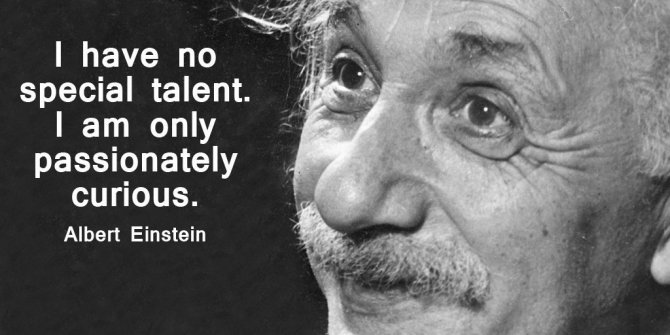


Curiosity and the Curriculum

einstein

With the growing popularity of cognitive load theory (CLT), we are seeing teachers adapt their teaching: removing the irrelevant, the cul de sacs and the diverting tangents from their teaching. Pupils can meet a piece of novel information mid lesson that they can’t locate within their schemas of knowledge and that can overload the working memory. They could also form misconceptions from incorrectly located knowledge.  Yet before all of these fascinating and intriguing diversions are removed from your teaching we’d urge you to pause and consider the nature of self-regulated knowledge acquisition.

When you first hear something on edutwitter or in education that seems to be gaining traction what do you do? Dig a little more? Learn a little more? Well the same happens with pupils. Their epistemic curiosity is driven by trying to locate new knowledge within their current schemas of knowledge. If they are unsuccessful, but still curious, then they accumulate new knowledge to expand a schema or build a new schema so that they are able to locate this new knowledge and further knowledge from the same field. Those intertextual or intersubject references of yours may be sometimes lost on most of the class, but for some of the class those references make them go off and read a new book, watch a film or start reading up on a subject – all wholly self regulated. They may be novices, but they can still be in schema building mode. Litman’s seminal work from 2008 on this divides it into two areas – curiosity and FOMO. Either you simply are curious to know more or others know about it, you don’t and you don’t like that so are driven to find out more.

Curiosity is an innate human characteristic, but it’s also definable. It’s a compelling desire to acquire further knowledge or develop a particular skill. Linked with strong self-regulation it can be ultimately rewarding. If you are designing a curriculum you have to think – am I building this into my teaching? Are you giving them La Grande Permission to go off and independently acquire new knowledge in order to epistemically locate a nugget of knowledge that you have exposed them to?

An inspired child is one happily gorging themselves on your subject; their amplified curiosity pushing them to accumulate new knowledge or abilities beyond that which they are learning in your lessons.  As an English teacher, I knew that children I inspired would be reading and writing beyond that which I was doing in lessons. They were no longer only learning my subject in lessons, my subject had become part of their identity. Accumulating new knowledge and abilities in English was part of their identity and driven by them – in addition to learning the curriculum which I had designed for them. I’m no different. My curiosity in my subject is continuous, self regulated and it forms part of my identity. When I teach, I don’t just pass on knowledge, I also pass on the curiosity that drives the passion for my subject.

There’s a world of self-regulated learning out there for the curious child and any curriculum you design needs to consider how you broker that curiosity to them.

Does culture trump everything?

woman holding eyeglasses
Photo by Lisa Fotios on Pexels.com

Barak Rosenshine’s Principles of Instruction provide a useful summary of some important ideas that we would encourage our trainee teachers to read and think about. The practice of instruction is an important aspect of teaching which many professionals need to be concerned with in their day to day work. However, as academics, one of our roles is to encourage our trainees to question the wide range of evidential and philosophical positions that they encounter, and before Rosenshine’s work becomes a kind of unchallengeable orthodoxy (something that happens with influential educationalists’ work – c.f. Lev Vygotsky) we would raise two questions that we think speak to the wider question of culture and its effect on education

  • To what extent are Rosenshine’s principles (and the research that he bases them on) facilitated by the cultural context within which he is working?
  • To what extent can any educational idea be successful if the cultural environment that it is being introduced to – both within and outside schools – does not see view that idea as desirable or compatible?

In raising these questions, we don’t seek to denigrate Rosenshine’s (or any other thinker’s) work, but rather get trainees and their mentors to think about  the wide range of processes at work in teaching and learning. However for at least one or two of us in the UoB team we would posit that culture might be the most significant, and perhaps unrecognised factor involved in these processes.  What we’re referring to when we talk about culture is in some senses, an intangible combination of location, class, race, gender and ethnicity, but for simplicity’s sake, we might see it as the interconnectedness of three things; who I am, where I come from and how those things shape my world view. This might also apply to groups of people or organisations, so culture could also refer to who we are and how we see the world.

Writing in the TES recently  teacher and blogger Mark Enser suggested that he thought that every UK teacher’s practice could be improved by adopting Barak Rosenshine’s principles of instruction. However, he also commented that he thought that it would take a culture shift to effect such a change in UK schools.  Enser is right about this – to move to the kind of culture in which instruction was the focus of all teaching would require some big movements in the way that both educational policy is made, schools are run and teachers are developed. Attempting such a shift would lead to that second one of our two questions above; is such a shift achievable, or indeed, desirable? To explore this further for a minute, let us return to Rosenshine, an academic working at an American University (Illinois, in this case) and working with people who are going on to teach in American elementary schools, high schools and colleges. Anyone who has spent any time in the American education system will know that instruction is very important; indeed, many of the people who work in these institutions will be referred to as instructors. Within this education system, they are expected to instruct, to lecture, to set quizzes and tests and to confer grades on their students.

We would suggest that this is something subtly different to the Northern European conception of a teacher. In the European tradition, instruction has only been a part of what the teacher is expected to do. Some people might think that this is what needs changing  about UK schools– that teachers need to be left to teach – but notice here that they don’t say “teachers need to be left to instruct”. We might suggest then that the culture of Northern European education – as opposed to an American, or Far Eastern one perhaps – is one in which the teacher has a more holistic, and certainly more pastoral, role. The teacher standards (regardless of what one thinks of them) in both the UK and the Netherlands would seem to indicate this. We could of course, have a national conversation about whether or not we think that this should be the role of the teacher, but right now, in many ways, this is the culture of UK education.

Instruction is of course, a hugely important part of many educational processes. Improving the way that our trainees here at UoB give instruction is something that we focus on quite a lot. Rosenshine provides a good starting point for thinking about what teachers need to do with instruction. But what about those circumstances where we don’t want them to be instructing (we think there are some) or perhaps those circumstances where we need them to be more critical than Rosenshine’s principles require them to be? (And we should say here, that probably in opposition to a lot of people writing on the internet, that we believe “whataboutery” to be a thoroughly good thing, as it drives inquiry on). We have recently been engaged in some research[i] which suggests that there might be some difficulties for science teachers  – who require a particular kind of ontological self- awareness – if they approach their instruction, or any other aspect of their teaching,  in an uncritical way; a fact not lost on some American colleagues who are thinking along similar lines. Such criticality requires an understanding of the culture in which Rosenshine originally develops his research, and the cultures from which his research examples are drawn (largely Maths, Science and English classrooms in the USA and Australia). It also requires some understanding that the culture of school science requires that teachers’ instruction deals in things that are, at best, simplifications.

The importance of understanding culture, is importantly for us, acknowledged by a wide range of people in education who come at the problem from different perspectives. Tom Bennett, for example,  arrived at the conclusion that the culture within a school is the single most important factor in determining how pupils behave. We often extend this by telling our students that they need to understand the culture that surrounds a school as well and this thinking is what leads to the second of the questions that we started with. If we want to promote a particular way of thinking about teaching and learning we need to understand the culture into which we are doing that promotion. Careful thought about this process is required beforehand if it is to work. For us this is best exemplified by the cautionary tales of the involvement of both Dulwich College and Wellington School in state education. Both instances suggest that knowing a little about the culture of the area that you are moving your educational philosophy into might be useful, and a consideration of the cultural differences between that philosophy and the world view of the people you are trying to introduce it to may also prevent misunderstandings. To paraphrase Theodore Roosevelt you might carry a big stick, but you still need to remember to walk softly.


[i] Bates, G. & Connolly, S. (2019)  “The role of intellectual virtues in the development of the science teacher: an initial provocation” Research in Teacher Education, Vol.9 (1), pp.6-11