Off-rolling – is this just the tip of the ethical iceberg?

pexels-photo-164636.jpeg

At university, if we want to initiate some kind of intervention in schools as part of a research project we would be expected to review the British Educational Research Association’s (BERA) guidelines. This guideline is full of sensible advice such as:

Researchers should immediately reconsider any actions occurring during the research process that appear to cause emotional or other harm, in order to minimise such harm. The more vulnerable the participants, the greater the responsibilities of the researcher for their protection.  (BERA, 2018, p.19)

So the first thing we have to consider is the likelihood of the intervention causing harm to the pupil. And the second thing we need to consider is that a pupil’s ‘vulnerability’ amplifies our need to protect the child from harm.

Now let’s turn to schools. If a member of staff in a school or group of schools wishes to initiate some kind of intervention as part of an evidence informed project to increase outcomes for the pupils or schools what guidelines do they have to follow? Well, the answer is, quite simply, none. Yet, if they did the same project in their school as part of undertaking a PGCE or Master’s then it would have to go through the exact same ethical approval process as described above.

It is important and worthwhile at this stage to set out that I am not talking about low level interventions of the sort that schools and teachers do all of the time. I’m talking about practice which could cause harm. And to vulnerable pupils in particular.

Let’s take off-rolling as an example. Here we see that staff in a school or group of schools have decided to create an intervention. The intervention could possibly benefit the pupils in the school cohort through redistribution of resources. It could even hypothetically benefit those who leave the school through the process of off-rolling. As part of an ethical approval process you would evaluate the likelihood of harm falling to those who are being off-rolled and look at the outcomes for them after they leave mainstream schooling.  Well, it turns out the outcomes for those who leave mainstream schooling are poor: 1-6% get their 5 good GCSEs. That’s considerable harm. Then you evaluate who is being off-rolled. Well, it turns out it is SEND pupils amongst others. I think we can safely say that they meet the term ‘more vulnerable’. This intervention would have died at the proposal stage at the table of the ethics committee. Even internal off-rolling such as a grammar school preventing Year 12s from moving to Year 13 if they did not attain specific grades would most certainly fail the ethical test.

But here is the rub. These schools that are off-rolling pupils are ‘compliant’. They meet the requirements that are set out by the accountability framework. The DfE doesn’t approve, OFSTED doesn’t approve, the children’s commissioner for England doesn’t approve, parents struggle to get provision for the SEND children or a second year of A level education for their children and yet despite this, schools are ‘compliant’.

So is that the requirement? That schools have to be ‘compliant’ and that this does not take into account ethics? Should not all major decisions of this type have to go through an internal ethical panel which in itself is reviewed and checked by an external ethical body? If schools are to be more evidence informed does it not also follow they should be ethically sound? Should governors and trustees also be part of this ethical process and receive training?

Before you say this is unworkable, consider how it is done at university. If a student proposes an intervention they have to write a section on ethics setting out how it meets the ethical requirements. It is reviewed by a qualified tutor. There is an ethics board for more contentious interventions. At each stage, if there is any doubt about the intervention, it is passed up further through more senior boards, staffed by more experienced and qualified senior professionals. The bigger the proposal, the more scrutiny for ethics it attracts.

The government could legislate against off-rolling easily and the affected schools would all change their actions and become ‘compliant’ again. Until the next ethically challenging idea thought up to affect outcomes within the accountability framework. Wouldn’t it be better to also have a headteacher’s body draw up a code of ethics similar to that from BERA and for all teachers and schools to use this when considering evidence informed interventions for their pupils?

Should you be hothousing your child for the new baseline entry test for 4-year olds?

boy child childhood happiness

Photo by Pixabay on Pexels.com

I know the controversial base line testing is not due to start until 2020, but believe me, parents of children aged 0-4 years old and parents whose children will be in child care before the age of 4 will be thinking about this test already. The test will come in after the education secretary has said that parents are not preparing children for school properly. And I want to talk about some of the issues around teaching after and preparing for this test.

I love teaching.  At this late stage of the academic year I may be looking at the world through a rose-tinted prosecco glass, but I love the kids in my Key Stage 1 class. I love working with them, their enthusiasm and watching their progress.

I even like some of the parents and I don’t tend to grumble about pay or workload. However, some of the testing I do have issues with.

Phonics Screening check:

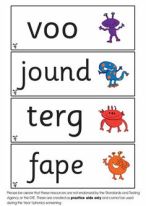
What has this test achieved?  It’s shown me that a 6-year-old child, with an assessed reading age of almost 10, can get five words wrong because they are desperate to make sense of nonsense words with strange alien pictures beside them.

nonsense

It has also shown me that an education system seemingly starved of money, has enough spare cash to finance a visit from an inspector to check your phonics materials are appropriately stored just in case you or the children in your class see the test prior to the launch date and memorize all 40 words.  Oddly, we are trusted to teach the nation’s youth but not to have enough integrity to store a test.

At the end of the day, this is a test that doesn’t tell me anything about a child’s reading ability that can’t be gleaned from hearing them read a book to me as a professionally qualified teacher.

KS1 SATS:

Those teachers lucky enough to teach a combined year 1 and 2 class get hit by the double whammy of phonics testing and the joy of SATS – another thing that parents pay attention to.  Not to mention another year of a narrowed curriculum (something OFSTED acknowledges), which focuses on maths and reading comprehension.

Should a child’s performance even hint at not reaching an expected standard then, in our school, TAs, HLTAs and even the Head Teacher are taking small groups right, left and centre to work on partitioning or reading inference.  Art, music, design and technology?  What year 2 child would want to do those when they can be trapped in a small, sweaty office with someone sequencing the events in a story about foxes and fishermen from 1 – 5?

Hopefully, the new shift in OFSTED’s focus will at least result in the rejuvenation of foundation subjects even if this does mean further change for teachers and an even shorter summer break while we work on the extra planning demands.

Reception Baseline Assessments:

For those of us in Key Stage 1 prepared to stick it out, 2022 – 2023 could see some light at the end of the long dark assessment tunnel.

Key Stage 1 SATS are (probably) being made non-statutory when those four-year olds unfortunate enough to have been subjected to the Reception baseline assessment start to filter through the system.  No matter how this initiative is dressed up, I haven’t spoken to one EYFS teacher yet who agrees with such a thing or even thinks it is necessary.

Surely it will result in those at the competitive end of the parental scale hothousing their toddlers and testing them on their knowledge of number recognition, shape and letters of the alphabet.  No playing in the garden making mud pies for you until you can repeat your alphabet three times! I can see why. Parents want their children to score highly in any assessment and are prepared to do whatever it takes to make that happen. However, just as in education, you can begin to see how an assessment could narrow the curriculum at home as everyone tries to prioritise learning the knowledge of the assessment.

If you think hothousing them is a good thing and can only help us teachers, you’re probably misguided.  For, in my experience, parents do not always approach education in a joined up way with the school. For example, they often tend to teach letter names not sounds. The result: many a Reception teacher will spend a year trying to get them out of this habit and learn their Letters and Sounds phases 1 – 3 instead.

Unfortunately, while primary and lower schools are fielding criticism for narrowing the curriculum to focus on statutory tests the very real danger is home could follow suit for pre-schoolers with this new baseline assessment. We have seen the impact of national assessment on curriculum at all stages of school – what will happen to the curriculum at home with this new national assessment? And if parents are thinking about this assessment that will happen in 2020 – perhaps right now they are also thinking about how they might hothouse their child to do well in this assessment.

I’m looking forward to September already, but in the meantime, I’ll refill my rose-tinted glass of prosecco and enjoy the sunshine …

A curriculum for the white working class

WWC Boys

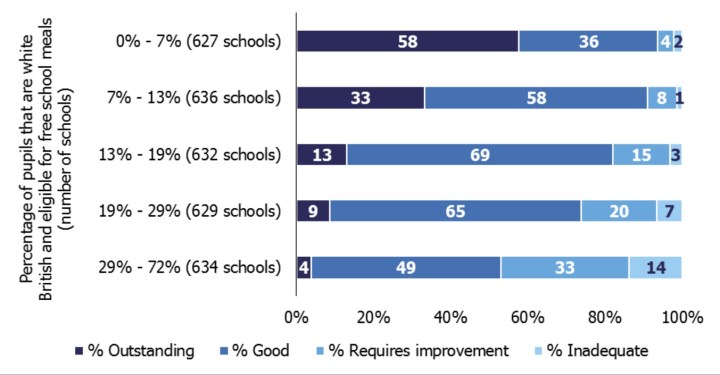
Recently there has been tensions between the Heads’ Roundtable and OFSTED over the alleged existence of system bias against schools with large numbers of white working class pupils. OFSTED has rejected this interpretation of the data and further clarified some of the data used in the original piece. They say that they acknowledge ‘factors’ that make it harder for these schools such as not being close to art galleries and museums and working with monocultural communities. Amanda Spielman has waded into the argument accusing this cultural group of people as ‘lacking aspirations and drive’ in particular when compared to migrants to the country.

Heady stuff indeed. However, we can hardly be surprised when schools are partly measured by how well the pupils achieve the specific knowledge that is defined by GCSEs (Outstanding schools especially). Why does OFSTED give some schools lower grades? Because it measures schools partly on their ability to deliver the knowledge based outcomes of GCSEs and, according to the Chief Inspector, these schools’ cohorts and families do not aspire to achieve them – as evidenced by their own interpretation.

Ofsted grades

OFSTED says schools whose cohorts cannot (will not?) achieve these outcomes are offering an inferior education and so this justifies them being  downgraded. They acknowledge the difficulties in hiring staff, in countering factors, but retain the right to downgrade these schools.

A child will learn from the culture that they grow up in what kind of knowledge will be helpful to them, or is valued within that community –  and what knowledge is a waste of their time. They then aspire to achieve that knowledge which is valued. Their parents’ opinions,  based on the knowledge & experience that their parents have, will also be influential as will the school teachers that they meet and experience. Contextual events might also affect these aspirations. The loss of local manufacturing jobs could influence families to reconsider a career in manufacturing for their child. Aspirations are a complex thing.

So, it isn’t that the white working class are not aspirational. They are perhaps, just not aspiring to develop knowledge of the curriculum being offered to them. Schools do not have the freedom to offer an alternative range of curricula due to accountability frameworks. And then, even despite their best efforts, they are still being told they are not meeting the requirements of the system – to make large numbers of white working class pupils aspire to develop the knowledge identified by OFSTED.
This possibly brings us back to curriculum design. Certainly, this point has been raised before: e.g. @paulgarvey4

Paul Garvey

If we are trying to select, with more detail, knowledge for the curriculum, then we have to have more debate about what this knowledge is. I’ve already written about how we need to develop more tacit knowledge rather than just explicit knowledge. But it goes further. Pupils are learning knowledge from their cultures. They are learning knowledge from their online interactions with others. They are learning knowledge from electronic stores of knowledge with direct instruction built in – YouTube features so many of these (and I have issues with some of this learning which I have written about in my book). We are making value judgments about this knowledge, so that we only value very specific domains of knowledge as being suitable for assessing pupils and schools. Much of what we should be doing is building curriculua that go further than  they  do currently –  as OFSTED duly acknowledge. We should be working with pupils on ways to acquire knowledge, to evaluate knowledge, to build new knowledge, to transpose knowledge to new contexts and so forth.

Yet, the moment you stipulate one curriculum over another, to recognise the value that either academic or non-academic knowledge has, then you run into issues. Many that I speak to tear themselves in two over this. Is an alternative curriculum like that offered in Germany  one of  low expectations (a technical education) or is it a suitable curriculum (they culturally aspire to achieve it)? Who chooses the curriculum that a child studies? If a school says, we are an academic school, don’t send your pupil here if that is not what you want for your child: is that acceptable? What if the child has a Special Educational Need or Disability?

passmores

Who decides what an appropriate curriculum is for the children of taxpayers? Is it the government of the day? OFSTED? The schools? The parents? I don’t think we have the answers yet and downgrading the OFSTED rating of schools serving these communities just seems to encourage schools to reject specific types of pupils in the hope that it will benefit their potential OFSTED outcomes. As Stephen Tierney says, it is career-ending suicide to take on leadership of some of these schools. That doesn’t sound like we have got it right to me.