Proof – the final frontier for teachers

Is it time to return to the cult of the teacher?

It’s the first thing you get told when you come into teaching: what works with one class doesn’t necessarily work with another.

A trainee teacher might lament after a lesson (that did not go so well) where they had repeated the plan from another class and their sage mentor would say – it might have worked quite well with 9x, but 9y are a different class.

This is not about learning styles, which has been substantially criticised. This is about knowing the individuals in your classes. A good teacher is always thinking about ‘maximum learning’. Don’t mistake this for, ‘entertainment’, ‘engagement’ or any other glib insult. We are not ‘making our subject interesting’ – our subject is interesting. But we are fine tuning the lesson to the unique community of learners that have been assembled to experience the subject with us in the form of lessons.

If we are really honest this is one of the biggest issues with the accountability system. A school’s results and standards of teaching don’t go up and down so dramatically as measured from year to year as the data likes to report. What happens is that one cohort is very different to another in terms of collated outcomes. A senior manager prays that a specific cohort goes through the system out of sync with the ofsted inspection cycle of a school. God help any school if ofsted turns up shortly after their one dodgy cohort’s variable results. This is really an amplified version of what Becky Allen refers to as ‘noise’ – the variables that can affect outcomes and attempts to measure progress using what is actually non-comparable data. A school could be comparing one good cohort with one not so good cohort and be deemed terrible or amazing depending on which came first. I’m afraid Progress 8 has done nothing to prevent this from happening as others have already said. The off-rolling we have seen is a direct result of people trying to manage this ‘noise’ and its impact on accountability measures. Indeed, having read Becky Allen’s blogs on closing the gap you begin to think the issue with the RCTs of the EEF is that they need to make stronger their awareness of ‘noise’ and how schools cater for this when exploring ideas that emerge from the RCTs. Rather than use the RCTs as eternal proof that setting, technology or any other intervention ‘works’ or ‘doesn’t work’, one should see the output from these RCTs as a source of information and evidence that could be useful when looking at one’s own specific cohorts (and remember, every year group is different).

All too often, we end up looking for the silver bullet. We try to remove the very thing which makes us human from the school system – our variability. Once all variability is removed then we can finally say that our resource or pedagogy is proven to work with all. Yet the inherent variables and other influential attributes all mean we cannot prove that something ‘works’ for everyone and every school.  That’s why social science can never lose its subjectivity or its lack of ability to resolutely prove things in the way that medicine likes to do. It’s therefore why you can’t ‘prove’ anything in education. But you can get the next best thing: a teacher.

A teacher, through forming a deep relationship with a class, can use their knowledge, intuition and teaching to maximise the outcomes for the individuals in that class. Those outcomes will be many, varied and not always measured or be measurable. Those outcomes will be assessment outcomes, aspirations, values, passions, inspiration, personal growth and so forth. Some will be quantified and some will be qualitative. The teacher will subjectively work out which methods, from their vast list of methods and evidence, are best for this group of individuals. It’s an amazing feat of human engineering and it’s a time-honoured ability: to be a truly amazing teacher for a class. And it’s the closest thing we will get to proving something works in education. You want a silver bullet? There it is: the teacher.

Eye to the telescope: Why teachers need theoretical lenses.

witten

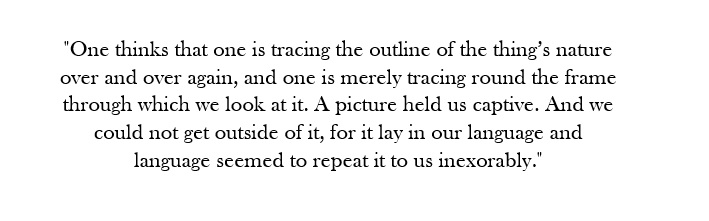
Teachers need theory. They also need to theorise. To us as a group of academics, this seems self-evident; theorising in education means thinking about why things happen in the classroom, and offering models that explain that why. However, it has become increasingly clear that education academics in particular, and perhaps academics more widely, have not been particularly proficient at explaining to teachers (both experienced ones and those closer to the commencement of their careers) why theory matters. The quote at the topic of this post, taken from Ludwig Wittgenstein’s Tractatus, should remind us that we need to look at how we might use theory to frame our experience of the world, while at the same time, remembering that the frame is not the same as the experience itself

A recent article in the British Educational Reasearch Journal brought this home to us with some force. In the article, a group of researchers had collected some data about the practice of setting by ability in British schools, and had then chosen to look at that data through a theoretical “lens” provided by the work of French sociologist Pierre Bourdieu. What does this mean? For most academics in most arts and social sciences, when they collect data, they need to locate that data in a theoretical framework, both because they need to think about how they will analyse the data but also, for practical reasons of time and space, they need to articulate how they are thinking about it.  These researchers  were interested in the idea that setting simply reproduces an educational status quo, and so looked at the data with Bourdieu’s concept of “symbolic violence” in mind. For Bourdieu, this term describes a situation in which a state of affairs has been established in society which damages a group of people, but has become so accepted or legitimised that even the people who the situation harms ,  often agree with it.  Some of the data that the researchers collected did support a Bourdieusian analysis of setting; for example, very few of the respondents in the survey – who were children in schools where they were set for subjects such as Maths and English – challenged the notion of setting as being the best way to determine who was taught what, even if they were in the ‘bottom set’.  However, the researchers also acknowledged the limitations in that this Bourdieusian analysis was less successful when helping to determine other things, for example why there is a significant gender difference in terms of pupil attitudes to setting.

Putting to one side the arguments that surfaced later in the online discussion  about methods and validity of data , what interested us were the nature of the responses to this article that appeared on the internet. These were fascinating, most notably because what became apparent to us was a) that some people did not really understand the way that the researchers were using Bourdieu and b) that a large number of teachers at best, did not really value the idea of theoretical lenses, or at worst understand the idea.

The point is here that that these researchers, like many across education, are deliberately choosing to look at their data using a theoretical model. They are doing this in order to do two things. Firstly, to see what that data can say beyond the obvious, literal description (to offer an interpretation of it) of it and secondly, to test out the theoretical model. In this particular instance, the researchers determined that some of Bourdieu’s ideas were useful for thinking about why pupils feel the way that they do about setting, but that in other respects they were not. Academics do this all the time in research.  I started my academic career using theoretical lenses from cultural studies to explain how I thought children worked creatively. Now,  alongside these, I use cognitive and sociological ones. I don’t think any of these tell the full story of the writing  and films that young people produce, but pragmatically, they make me think about how that production happens.

This does not mean that the theoretical model works or successfully explains real world phenomena all the time, but rather that it might offer some perspectives on it that we may not have previously considered. This is the important thing about theoretical lenses for teachers. You may not agree with the researchers’ findings regarding  (in this example) setting, but what you should probably do, as an informed and reflective teacher, is think about the inherent problems of setting – and most teachers would agree there are at least some of these – from both your own and other academic perspectives. People who suggested that the researchers had decided on the outcome of the study prior to collecting the data are sort of missing the point here;  this was a Randomised Controlled Trial, and the data included quantitative as well as qualitative elements, but the researchers were clear  from the outset that they were coming from a place in which the social justice imperatives of education were driving their work.  As such, they chose to make a Bourdieusian analysis of that data. Other academics might choose to look at that data through a different lens.  It would be interesting to see, for example, something like Creemers & Kyriakides’ Dynamic Model of School improvement  applied to the same data to see what it said about setting in terms of school effectiveness – or the extent to which Lave & Wenger’s ideas about communities of practice might work in schools which stream by ‘ability’. Even if we want to view data in purely scientific terms, it is highly likely that we will be applying a theoretical lens to it – perhaps Popperian falsifiablilty, or the Kuhnian idea of the scientific revolution. Either way, these are still theoretical models, with imperfections and limitations, but this doesn’t mean that we shouldn’t bother with them.

Are you a PGCE mentor or PGCE trainee? Read on…

woman writing on dry erase board
Photo by Christina Morillo on Pexels.com

Every year, around this time, a PGCE trainee is preparing to meet their PGCE mentor or vice versa. And this year, more than ever, I’ve seen on Twitter  ‘Anyone got some advice? I’m about to become a mentor/start teacher education.’

You’ll be pleased to know the whole world has been training teachers and using mentoring to do this for some time so you won’t have to reinvent the wheel. That said, get that starting point wrong and you’ll all be playing catch up until the time comes for the mentor and trainee to part – in some cases with the trainee leaving the profession forever. Attrition (losing trainees from the course) is a real problem in our profession. When trainees across the country start their training, we lose them, nationally, immediately – they are put off by what they find and how they are treated. This loss continues throughout the year. They find child care too hard to arrange around a placement school. They don’t have the finances or time to travel to some placements (they don’t all have cars). There’s also a very wrong set of ideas that the trainee timetable is light – our work on directed time budgets show trainee teachers have more directed tasks than early career teachers. Finally, there’s a wholly unevidenced thought amongst some that giving a trainee ‘intensity’ helps prepare them for the sheer horror of overwork later on in their career. It doesn’t (they leave the profession) and I’d rather we reduce the workload of teachers than think: how can we burn off those who won’t behave like workaholics? If someone comes up with an idea about teaching, ask them where the evidence is. The research even says block placement with twilight sessions leads to lower numbers (isolation, lack of community and support) whereas a day release course (off site once a week to get input, support and reflection) is shown to lead to better retention. All of this is why we’ve extended the NQT year to the two year ECT approach. We need to stop ‘stress testing’ trainees out of the profession and instead support them to stay in the profession. And that leads us to our two year long research project.

When looking at trainees, you’ve got to think about that very first meeting. We have undertaken a two year action research project into this ‘first meeting’, finding out just what mentors and trainees think are important questions for that first meeting. The distilled wisdom of hundreds of mentors and trainees can now be shown in the end set of questions which we recommend be explored for this first meeting. Some of them are quite obvious

What boundaries do we need to set for communicating with each other? Are you okay with phone/email/text? When? When not? How quick does my response need to be?
Do you want the opportunity to speak to me briefly every day about what you’re doing or are you happy to keep it to the weekly mentor meeting?

Some mentors are quite laissez-faire – a trainee can text them on a Sunday evening whereas others would be appalled. Best establish these things quite quickly. And really? I think as a profession we would rather that weekend communications were kept to a minimum these days.

You know how organised we have to be in teaching right? Well, best get it out there quickly if organisation isn’t someone’s forte. And whilst we don’t just mean the trainees, do ask them what their time management is like. But don’t ask them to plan lessons from scratch at the start of their placement. Give them the plans and ask them to learn with you how to adapt them to their class. When it comes to planning from scratch, co-plan with them before letting them progress to full solo planning.

How are you at managing your time – is this something you feel you need to develop?

Some of the questions are about getting straight to the point so people aren’t trying to engineer conversations around to crucial topics so they can finally ask the question that they really need to ask.

What information do you think you need from me to start this placement off as well as you can? What do you expect of me throughout the placement?
What would you describe as your strengths and weaknesses and how do you think they might help or hinder you on placement?

Some of the questions our mentors came up with were quite clever. This one for example:

If you truly had no idea what to do for a lesson, but had to send something in, would you send in something which was in your opinion not very good or would you write in and say you could not do the task?

And what the mentors said was – I can’t give you feedback on empty air. Just because you don’t think an idea is of a good quality, doesn’t mean others will. Send it in.

There was also a tacit acceptance that trainees sometimes arrive to a second placement having had quite a specific first placement experience or previous school experience.

How were you mentored/inducted on your previous placement/employment?  Tell me about what went well and what could have been better.

I haven’t got time to go through all the questions from the research here, but I think I’ll finish with an awareness that there are different pedagogical models that are present in other schools. The DfE says that teacher education should prepare someone to teach in any and all schools in England. All approaches come with limitations and recognising that a trainee is a teacher in development not a teacher being inducted into a school as an employee is a good thing to do. E.g. just because a mentor doesn’t agree with group work or direct instruction doesn’t mean a trainee has to follow suit. Indeed, if your department or school eschews a particular pedagogy then you should ensure your trainee gets an opportunity to develop this area. What happens if they go to another school that is opposite? E.g. some schools have projectors in every classroom and expect the trainees to be comfortable with using well designed and dual coded materials. Other schools have gone the opposite way and stopped using projected materials. Both schools would need to work with their trainee to practice both approaches.

What kind of pedagogical approaches and techniques have you had the opportunity to experiment with previously?  Is there a particular pedagogical approach that you would like to develop in this placement?

That first meeting then – it crucial to getting everything out and ensuring that lines of enquiry, boundaries, fixed ideas, prior knowledge, expectations and so forth are all explored so that you can move forward from that point as a team.